A Guide to a Greek Food Menu
(What to Expect + What to Order)
This post may contain affiliate links, that means if you use the links to purchase something I get a commission at no extra cost to you. Click here for more information about this.
Even though I’ve been traveling to Greece for years now, I still remember being totally confused the first time I had to read a Greek food menu on my own.
My mom insisted my siblings and I order for ourselves, and suddenly… I forgot how to speak Greek. Honestly, I kind of forgot how to speak in general. It felt like my first day on earth and I had never ordered food before.
But fear not—it’s actually not as scary or overwhelming as it seems.
In Greece, food is basically a love language, and the waiters are more than happy to help you figure out what you want. But if you’re shy like me, I wrote this guide so you can walk into any taverna already knowing what to expect—and maybe even what to order.
This post is all about a Greek food menu.
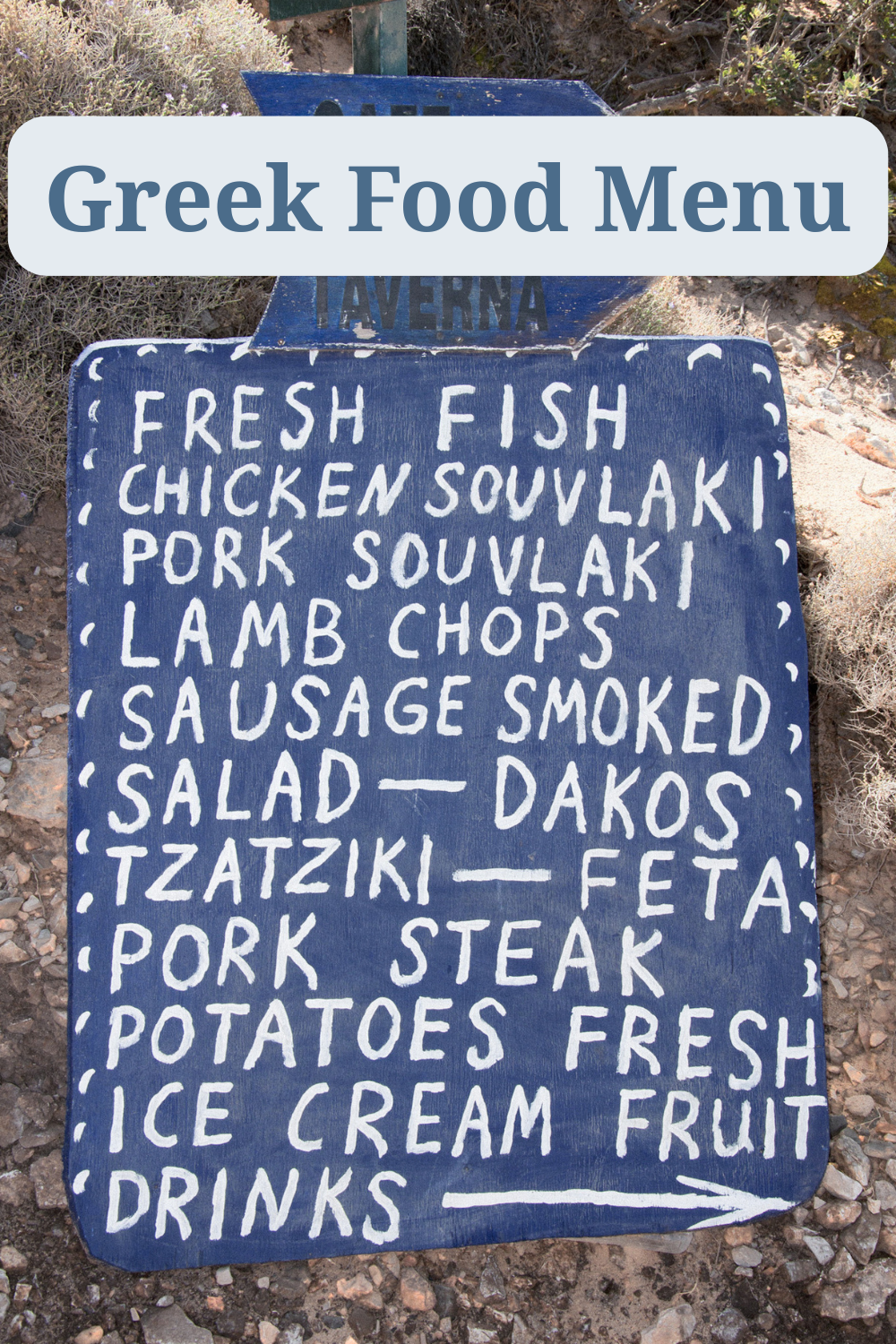
Greek Food Menu
How Greek Dining Actually Works
The biggest difference between dining in Greece and dining in the U.S. is the pace.
Meals aren’t meant to be quick, in-and-out experiences. They’re meant to be slow, shared, and social—filled with multiple dishes and long conversations with friends and family.
If you’re traveling alone, that doesn’t mean you have to rush either. Sit back, people watch, journal, or read a book. There’s no pressure to leave quickly.
Bread and water will usually arrive automatically, or they’ll ask if you’d like a large bottle of water for the table. From there, everything unfolds at a relaxed, natural pace.
Greek appetizers—also known as meze—are so good that you could honestly make a full meal out of them.
And a lot of the time, people do.
There are so many options, but some of the most common you’ll see are:
Dips like tzatziki, melitzanosalata, and taramasalata
Spanakopita or tiropita
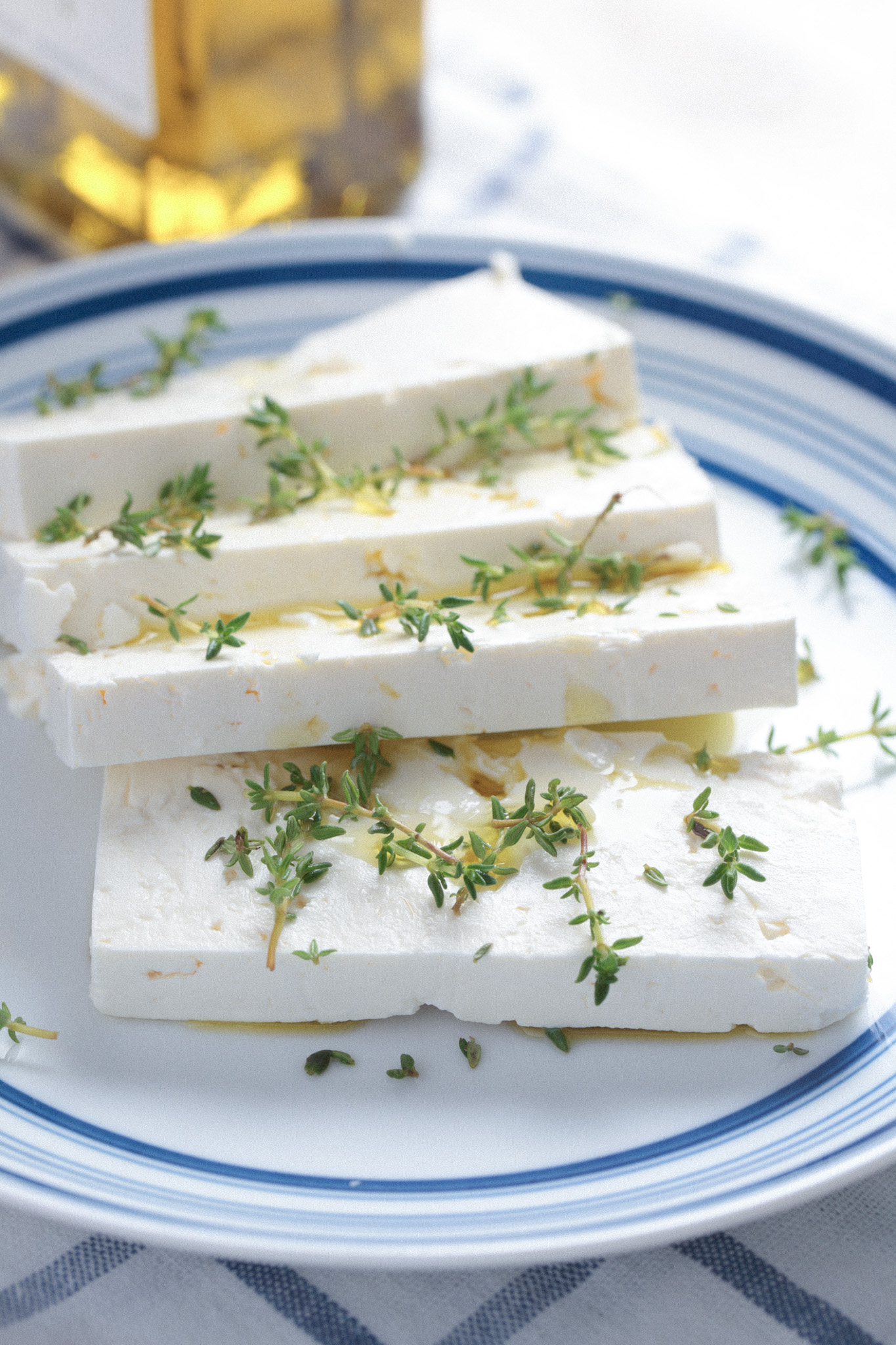
Saganaki (fried cheese) or feta with honey
Fresh bread or pita for dipping
And then there’s the Greek village salad—horiatiki—which I order almost every single time.
It’s nothing like a typical salad in the U.S. There’s no lettuce—just big, fresh chunks of tomatoes, cucumbers, onions, olives, and a thick slab of feta, all covered in olive oil. Simple and unreal.
Because meals are meant to last, it’s completely normal to start with a few meze, sit and talk for a while, and then decide later if you even want a main dish.
If you do decide to order a main, Greek menus are usually divided into a few categories:
Grilled meats: souvlaki, gyros, bifteki
Seafood: grilled fish, calamari, octopus
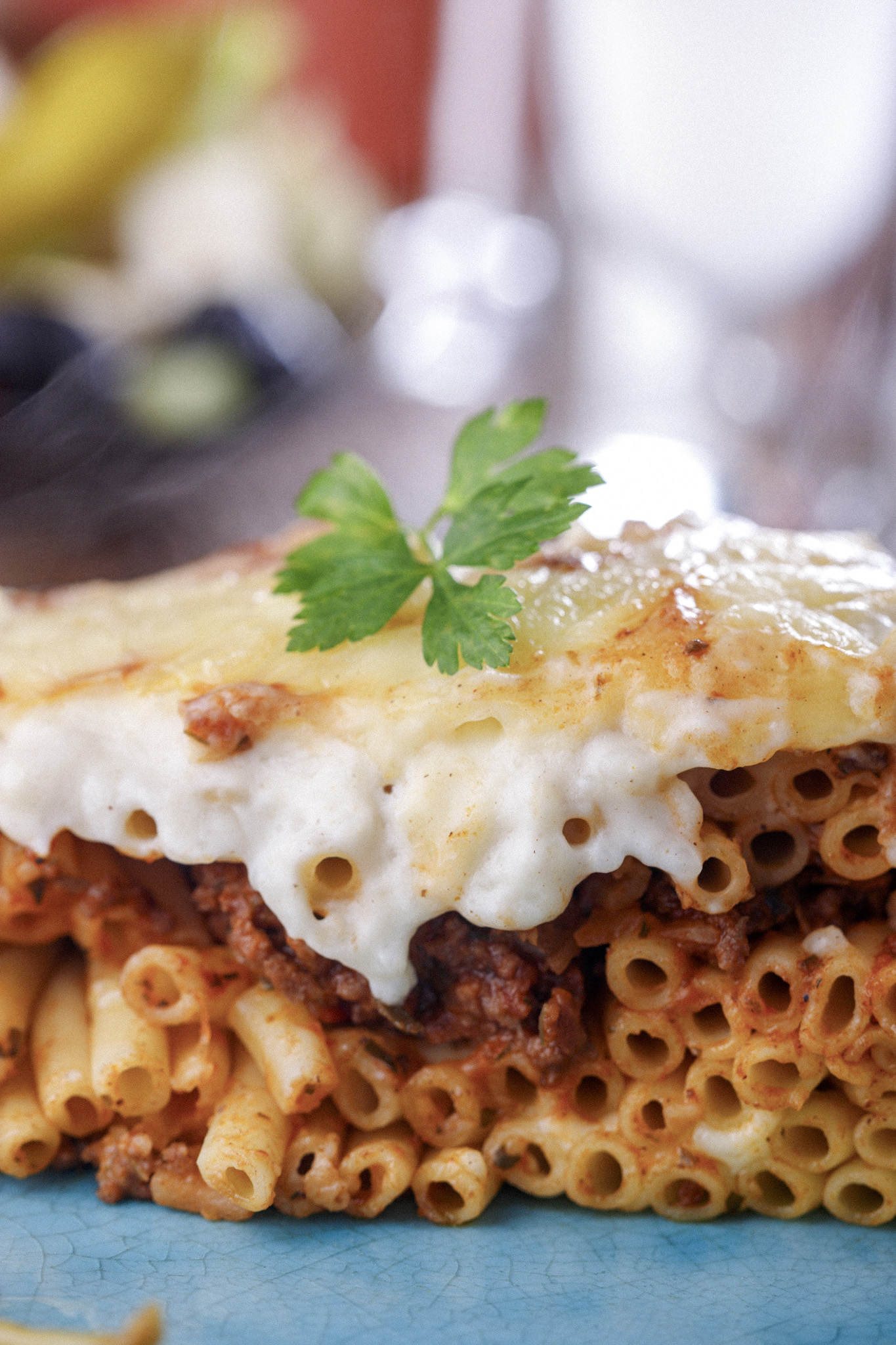
Oven dishes: moussaka, pastitsio
Sometimes you’ll also see:
Tis oras (grilled “of the hour”)
Mageirefta (home-cooked, comfort-style dishes)
What you order here really depends on the restaurant. Some places specialize in grilled meats, others in traditional cooked dishes, and others in seafood.
What a Typical Order Looks Like (Putting It All Together)
If you’re dining with 2–3 people, a typical order might look like this:
Drinks (optional, but very common)
2–3 meze (like saganaki and tzatziki with bread)
A Greek salad
1–2 mains to share
From there, you either order dessert… or happily accept whatever surprise shows up at the end.
What I Personally Order
My go-to order in Greece usually looks something like this:
I’ll start with either a beer, wine, or sometimes tsipouro to share—and I always make sure we have water on the table too.
For appetizers, I almost always get saganaki, tiropitas, tzatziki, and whatever bread the restaurant serves.
After slowly grazing on all of that, I’ll decide on a main depending on the place.
If it’s more of a souvlaki spot, I’ll go that route. If it’s known for traditional dishes, I’ll order something like pastitsio or keftedakia. And if you’re with my family, there’s definitely going to be seafood involved.
Grab your FREE ✨Ultimate Greece Travel Starter Guide!!!✨
Skip the overwhelm — I pulled together the must-knows so you don’t have to dig through a million sites.
Quick Glossary (Helpful Greek Menu Words)
Meze – small shared plates
Horiatiki – Greek village salad
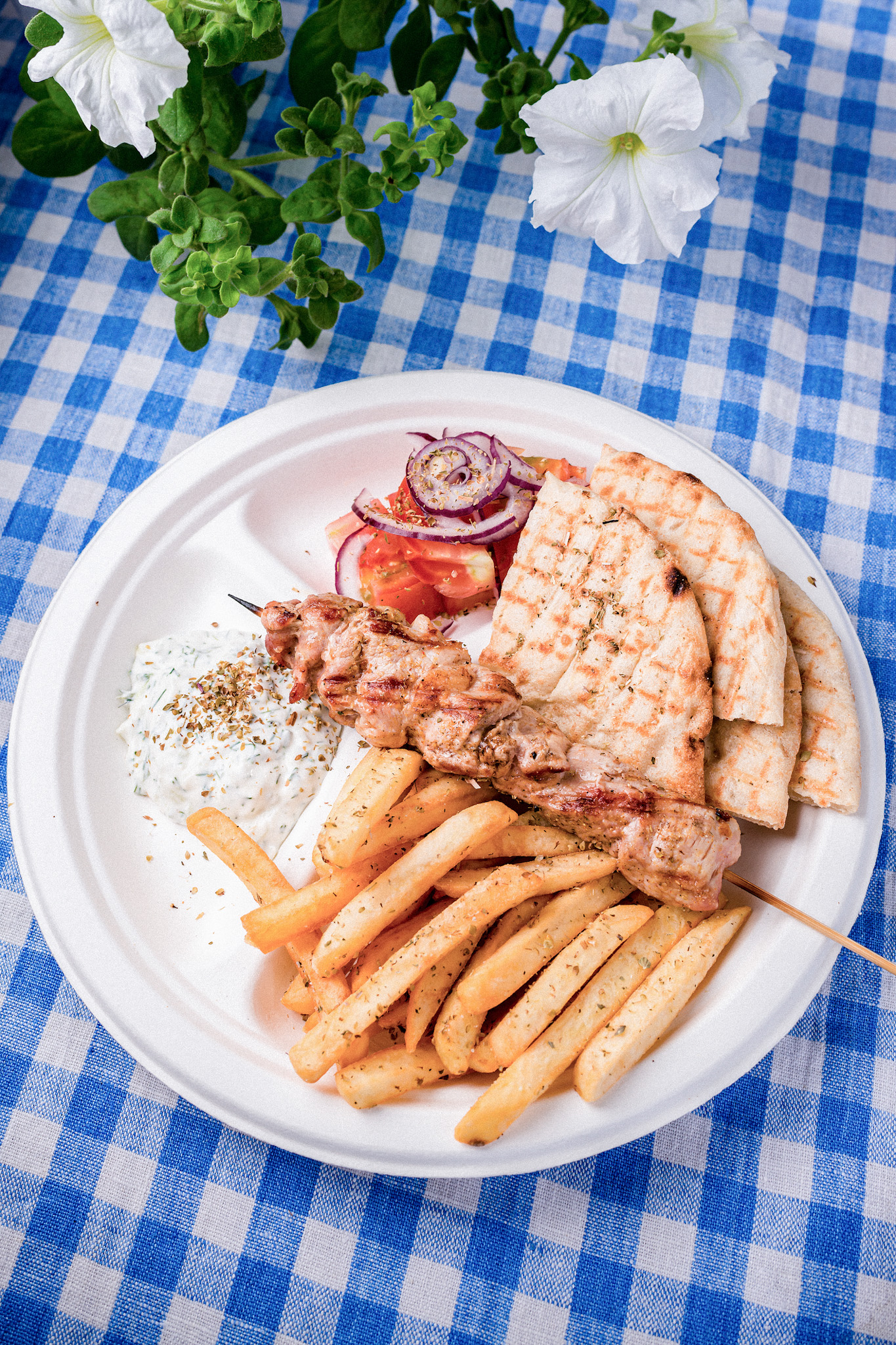
Souvlaki – grilled meat skewers
Gyro – shaved meat, often served in pita
Tzatziki – yogurt, cucumber, garlic dip
Tis oras – grilled fresh to order
Mageirefta – home-style cooked dishes
Final Thoughts: Don’t Try to Order Perfectly
Curiosity is always better than correctness.
Part of the experience is not fully knowing what you’re ordering—and discovering something new because of it.
If you treat dining in Greece like a marathon instead of a sprint, you’ll have a completely different (and much better) experience.
Because at the end of the day, Greek dining isn’t just about the food—it’s about the slow pace, the conversation, and the feeling of being there.
I first came to Greece as a baby, and I’ve been in love with it ever since. Now a Greek citizen, I’ve lived here several times, speak the language, and embrace the culture—from the food to traditional dance. Through this blog, I share the beauty, stories, and everyday life of my favorite place on earth.



 Skip the overwhelm — I pulled together the must-knows so you don’t have to dig through a million sites.