Driving in Greece (What No One Tells You)
This post may contain affiliate links, that means if you use the links to purchase something I get a commission at no extra cost to you. Click here for more information about this.
I was visiting Greece with my grandfather, and he wanted to go back to the village where he was born. So, somewhat last-minute, we decided to rent a car.
I was 22 at the time (and fully thought you had to be 25 to rent a car), but I was up for the challenge.
My biggest concern wasn’t even the driving—it was whether we’d be able to get an automatic car. Manual cars are much more common in Greece, and we were renting from a smaller town in the Peloponnese, where options are limited. I didn’t know how to drive stick, so this felt like a real gamble.
Somehow, it all worked out. They had a small automatic Toyota, and it ended up being perfect.
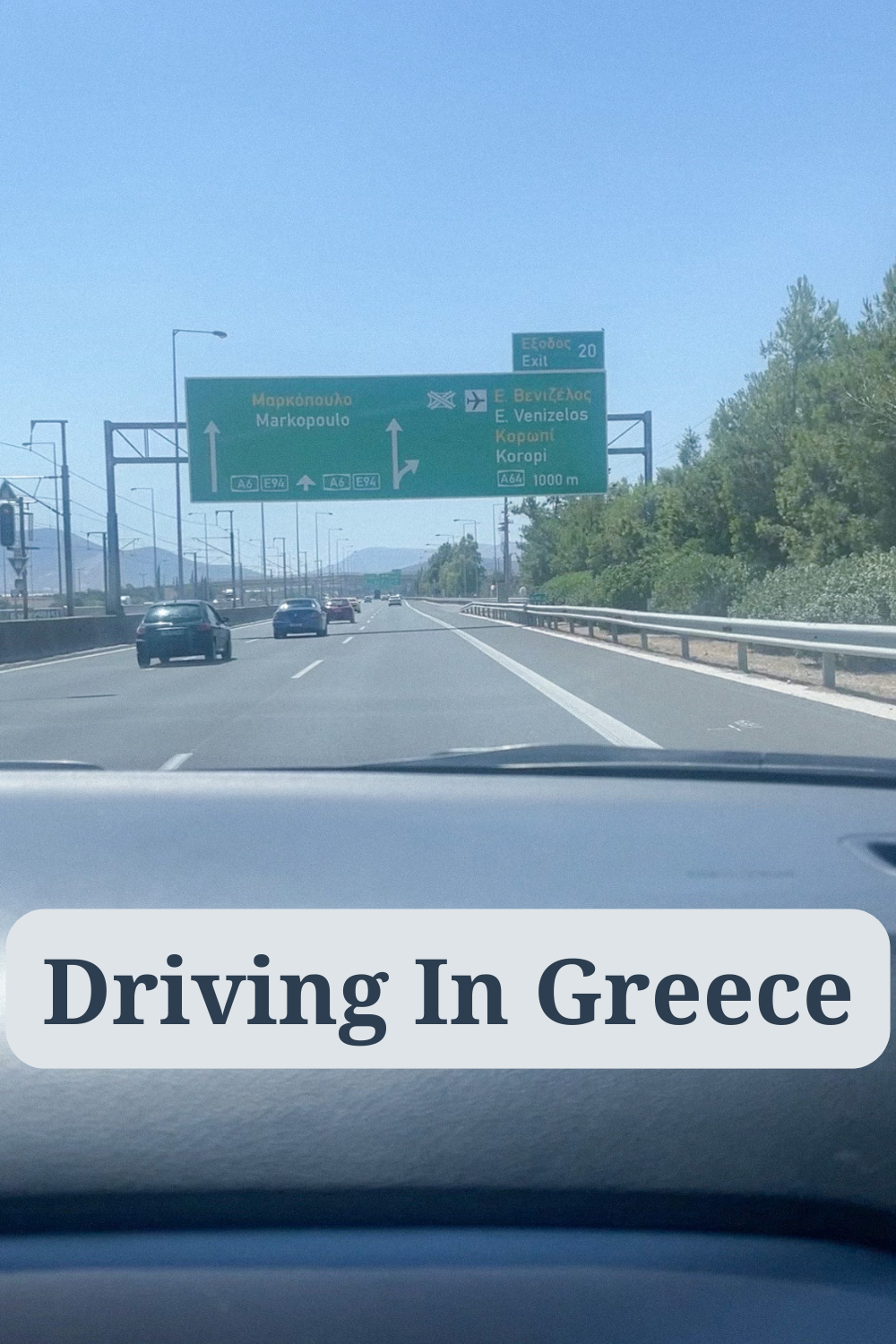
Driving In Greece
I had been visiting Greece since I was a baby, so I already had a sense of how… intense Greek driving can be. And honestly, my time driving in college in California prepared me well—I learned how to be a defensive driver, which is essential here.
If you’re an anxious driver—or overly polite—you’re probably not going to love driving in Greece.
Greek drivers aren’t necessarily mean. It’s more like… every man for himself. But the thing is, everyone understands that, so there’s actually a weird kind of flow to it.
In some ways, I found it easier than driving at home in Portland, where you get a mix of driving styles and uncertainty—like not knowing if someone is going to let you merge or completely block you out.
In Greece, you kind of always know what you’re dealing with.
The Unwritten Rules of the Road
Motorcycles Are Everywhere
Motorcycles weave through traffic like they’re kids running through a corn maze.
They’ll pass you on either side, squeeze through tight gaps, and appear out of nowhere. It can feel overwhelming at first, but the key is just awareness.
Check your mirrors constantly—especially before turning or shifting lanes.
Stop Signs Are… Flexible
Stop signs are generally treated more like yield signs.
If you come to a full stop, there’s a decent chance the person behind you will not be expecting it. I usually take my cue from the car in front of me, but add a little extra caution.
Even if you technically have the right of way, always approach intersections carefully.
Lanes Are More of a Suggestion
Sometimes road lines are faded or completely missing. Other times, they’re very clearly marked—and still ignored.
And then in places like Athens, lanes are followed more like you’d expect.
The best rule of thumb: copy what the other drivers are doing.
Also, turn signals are… rarely used. I still always use mine because it’s honestly one of my biggest pet peeves. It’s the easiest part of driving—just flip the switch. There’s no reason not to.
Parking Culture Shock
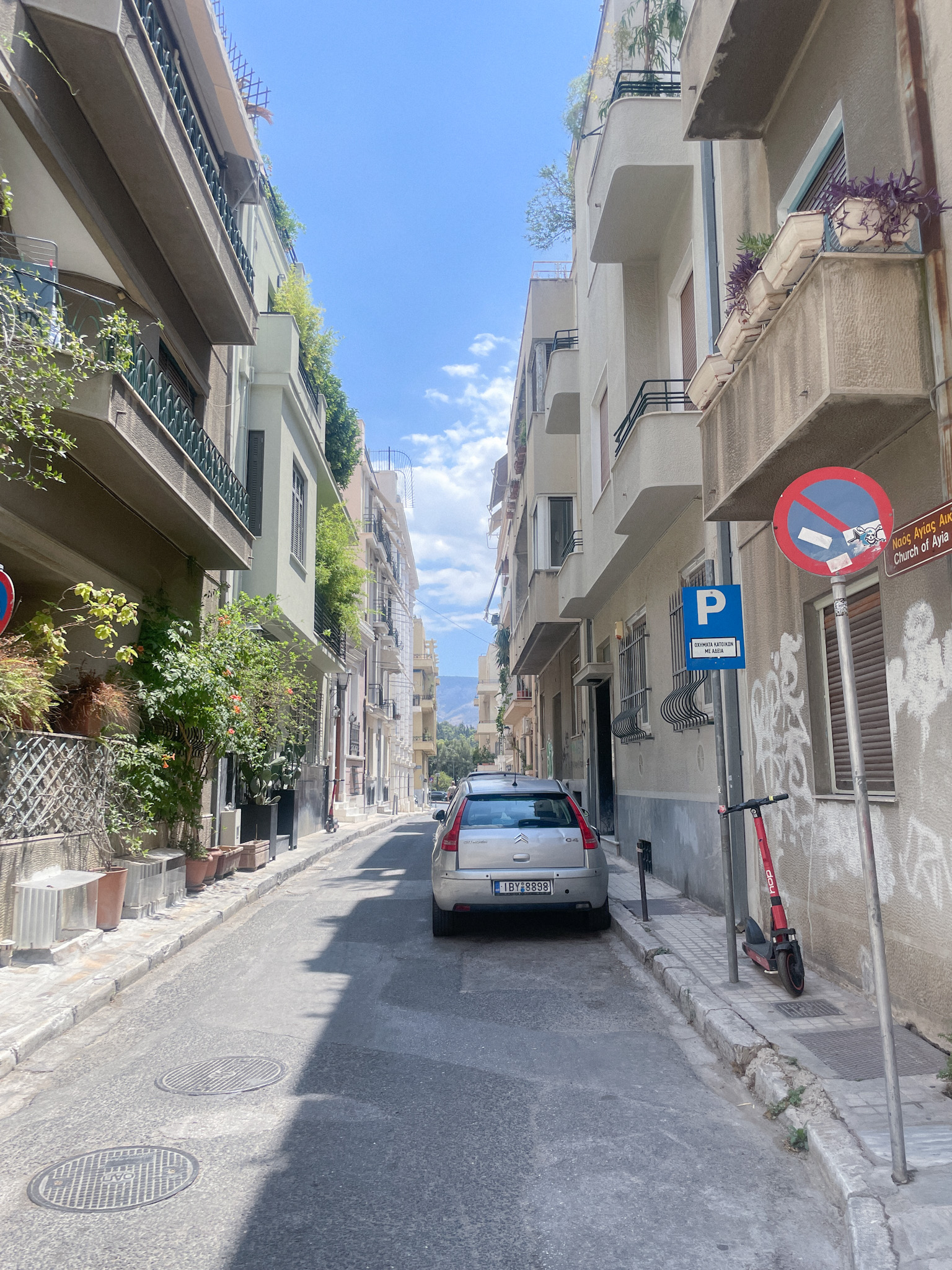
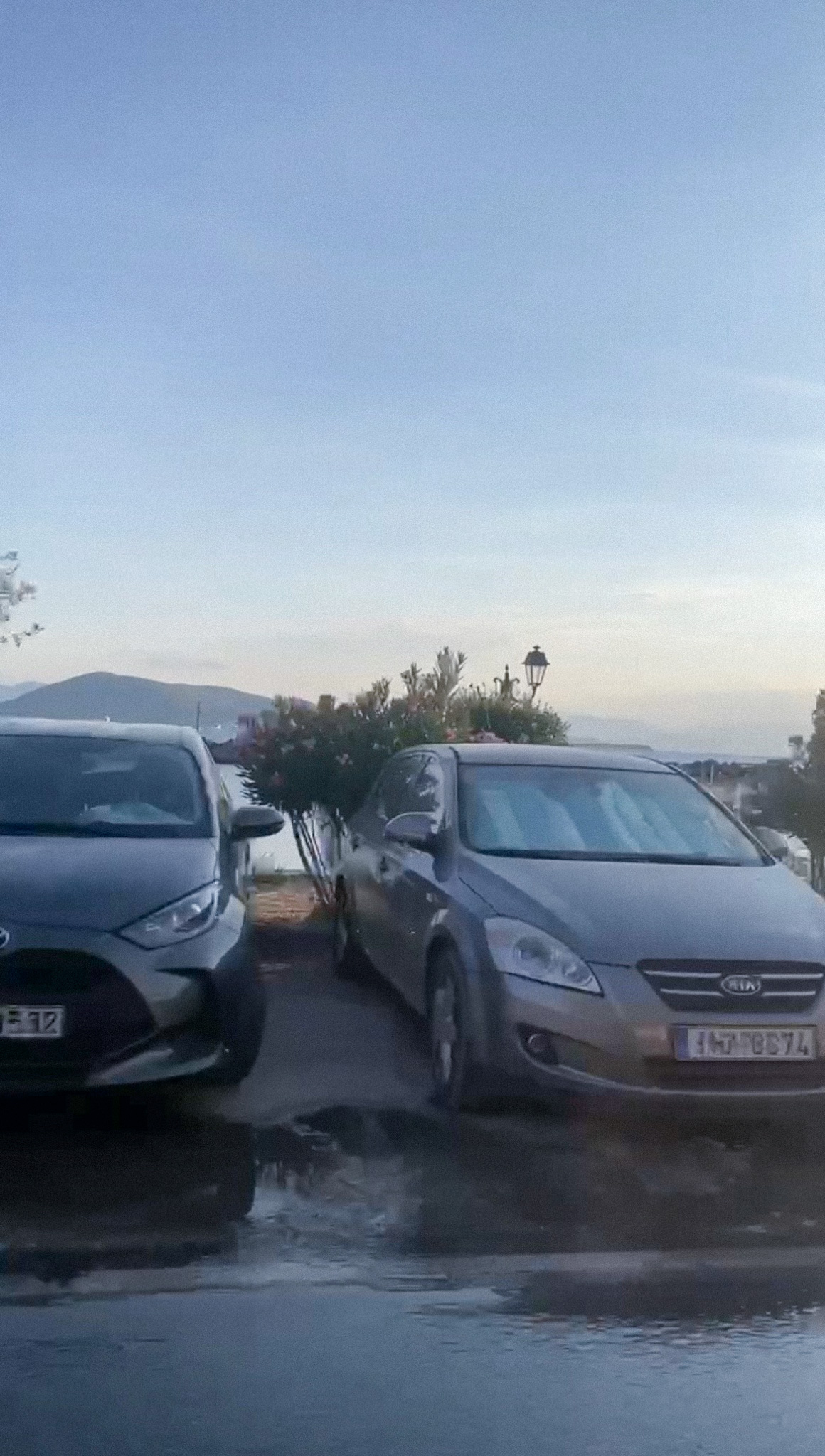
Double parking is completely normal. So is pulling over and stopping, even if you’re still partially in the road.
It sounds chaotic, but people just check their mirrors, shift into these sort of “invisible lanes,” and keep moving.
Parking laws can feel almost nonexistent—especially outside of major cities. Unless there’s a clear sign saying not to park, people tend to just… park.
You’ll see cars in places that would absolutely not fly anywhere else.
That said, cities like Athens are stricter, so it’s always worth paying attention to signage when you see it.
Grab your FREE
✨Ultimate Greece Travel Starter Guide!!!✨
Skip the overwhelm — I pulled together the must-knows so you don’t have to dig through a million sites.
Pedestrians & Crossing the Street
Pedestrians do not automatically have the right of way.
Even if you have a green light at a crosswalk, cars turning right will often keep going. It’s not aggressive—it’s just how things work.
You have to stay aware and make eye contact before stepping out.
Also, if you want to give the driver a “thank-you” wave, do it with your finger only! The palm-out hand gesture is the Greek middle finger.
Jaywalking is also constant. People cross wherever and whenever they want, so as a driver, you have to expect the unexpected at all times.
Highways & Tolls
If you’re driving on major highways—especially on the mainland—you’re going to hit tolls. A lot of them.
They’re not just on the highways themselves, but also on on-ramps and off-ramps. So if you decide to exit to grab food or gas and then get back on, you’ll likely pay twice.
Because of that, it’s often easier to just stop at the gas stations, cafes, and rest stops directly along the highway.
Tolls usually range from about €1 to €5, which doesn’t seem like much, but it adds up quickly on longer drives.
You’ll typically see a few different lane options:
- Fast-track lanes (like FasTrak in California)
- Card-only lanes
- Cash-only lanes (bills and coins)
- Booths with an attendant
One random tip: always take your receipt. A lot of people don’t, and they just end up blowing around everywhere.
Grab your FREE
✨Ultimate Greece Travel Starter Guide!!!✨
Skip the overwhelm — I pulled together the must-knows so you don’t have to dig through a million sites.

Practical Tips for Driving in Greece
Rent a small car (especially for islands and villages)
Get full insurance—roads are narrow and parking gets tight
Use Google Maps, but don’t rely on it blindly
Drive defensively, not aggressively
Stay calm—honking is usually just communication, not anger
Avoid driving in central Athens if you can
So… Would I Do It Again?
Honestly, yes.
It’s not always relaxing, and it definitely takes some adjusting. But once you understand the rhythm of it, driving in Greece gives you a level of freedom you just can’t get any other way.
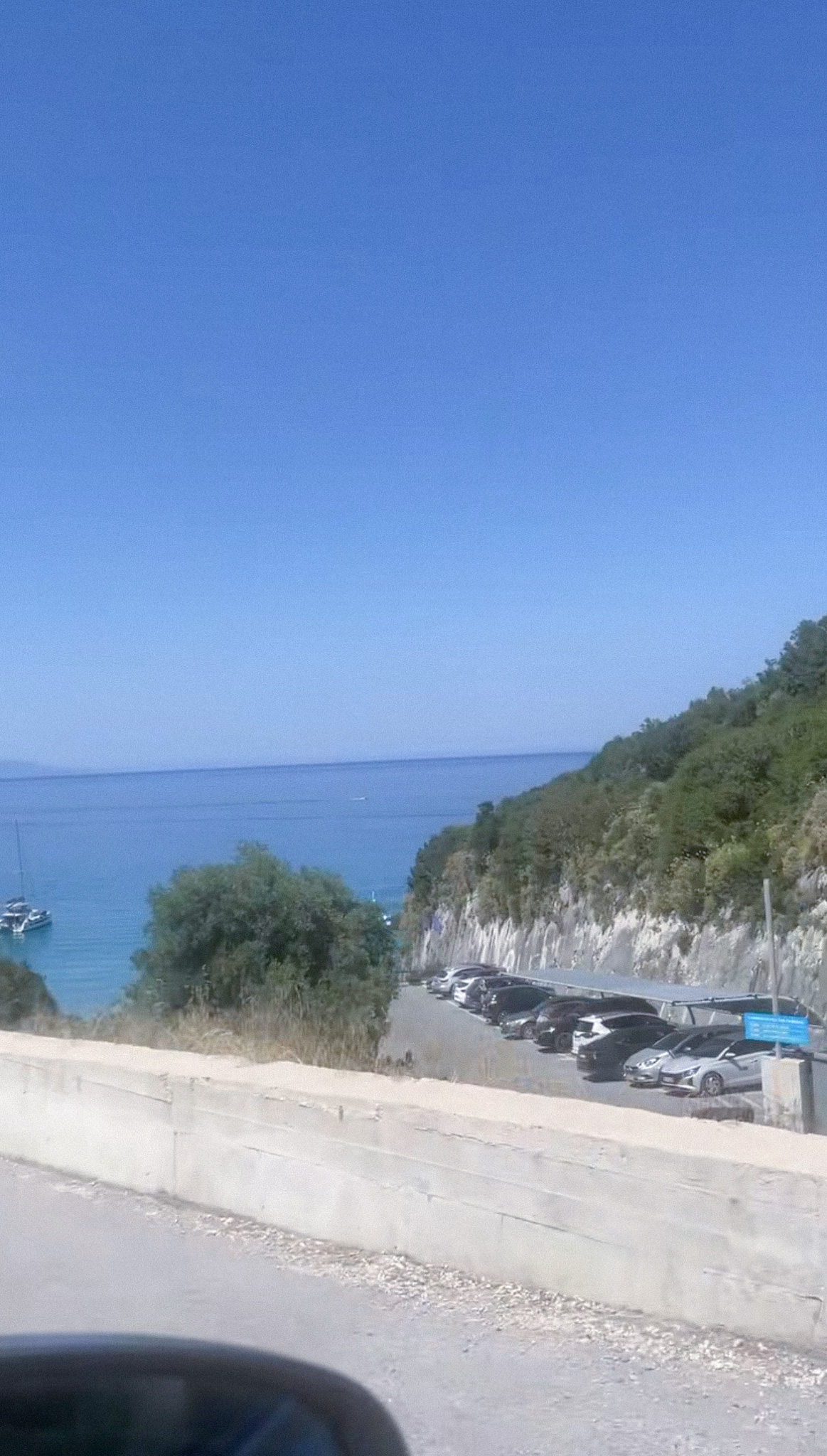
You get to explore small villages, pull over whenever you want, and experience parts of the country that most people miss.
It might feel chaotic at first—but there’s a system to it.
You just have to learn how to move with it.