


How to Get Around Greece
This post may contain affiliate links, that means if you use the links to purchase something I get a commission at no extra cost to you. Click here for more information about this.
Getting around Greece is surprisingly straightforward once you know your options.
Whether you’re exploring Athens, road-tripping the mainland, or hopping between islands, there’s a mode of transportation that fits every travel style and budget.
Below is a practical breakdown of the main ways to get around Greece, with tips based on real experience.
How to Get Around Greece
By Rental Car
Renting a car gives you the most flexibility, especially if you plan to explore the mainland, smaller towns, beaches, or islands where public transportation is limited.
Most travelers rent cars either from Athens International Airport or the Athens city center.
These locations have the largest inventory, which means better availability—especially for last-minute rentals.
That said, I highly recommend reserving your car in advance, particularly during high season.
Renting at the Athens Airport
The Athens Airport is the most convenient place to pick up a rental car, as you can drive off immediately upon arrival. There are three common pickup scenarios:
- Inside the Arrivals Terminal
In the middle of the arrivals hall, you’ll find counters for several rental companies. Look for your company’s sign, check in with the agent, and you’ll either receive your keys directly or be directed to the correct parking area. - Off-site Rental via Shuttle
Some rental companies require a short shuttle ride. Exit the arrivals terminal (any exit works), turn right, and walk along the sidewalk until you reach the end of the building near the parking area. You’ll find the shuttle buses there, which will take you to the off-site rental location. - On-site Rental Car Lot
This lot is still on airport property. Exit arrivals, turn right, walk past the shuttle/bus parking area, and continue to the very end. Cross the street and you’ll see a large lot with rental company offices where you’ll check in and collect your vehicle.
Renting Outside Athens
Cars can also be rented on the islands and in smaller cities, but inventory is much more limited. If you plan to rent outside of Athens, booking ahead of time is essential.
Good to know:
- You may or may not need an International Driver’s Permit, depending on your license and rental company.
- Drivers under 25 years old often pay additional insurance or young driver fees.
Grab your FREE
✨Ultimate Greece Travel Starter Guide!!!✨
Skip the overwhelm — I pulled together the must-knows so you don’t have to dig through a million sites.
By Bus
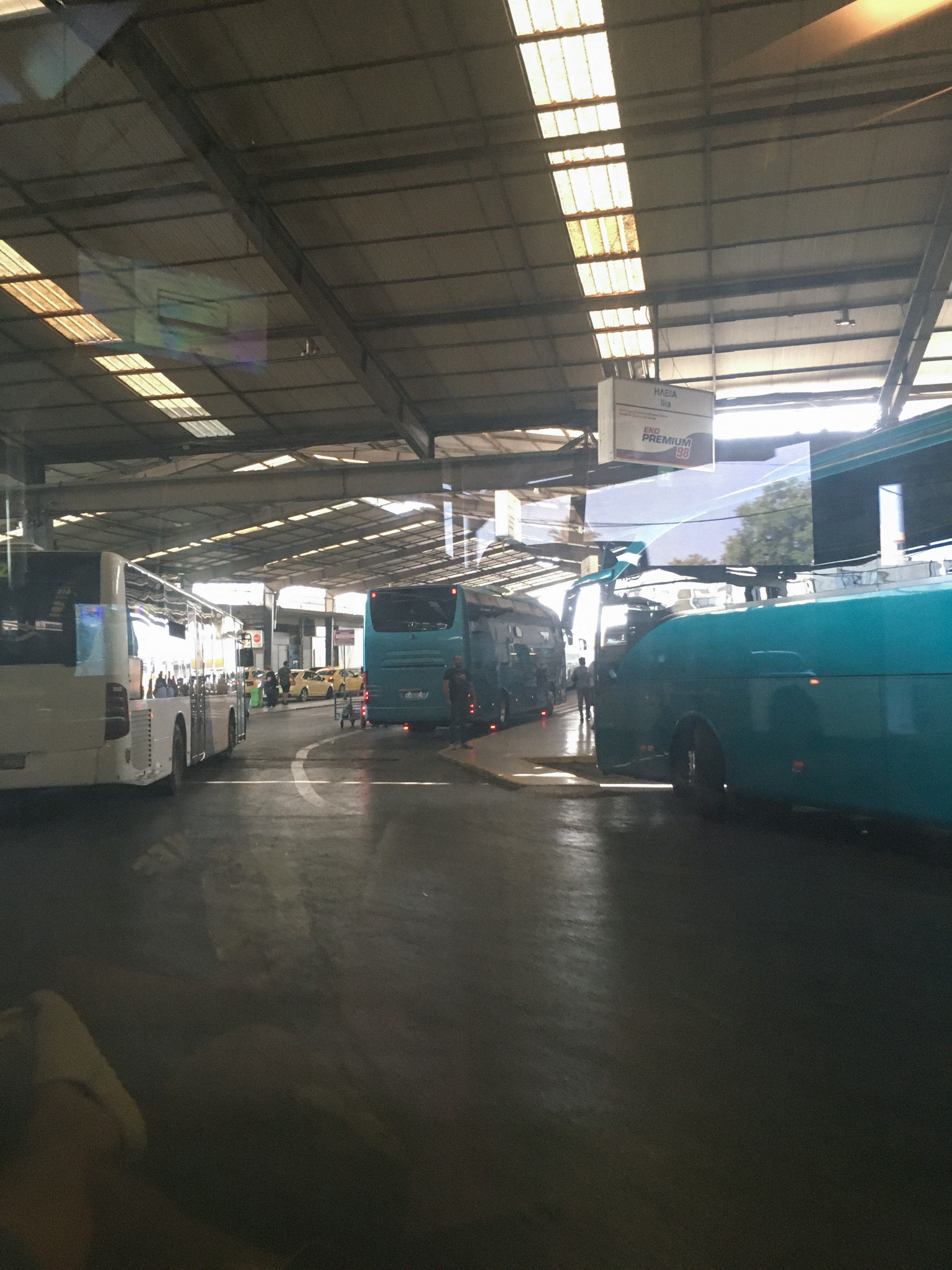
Buses are the most abundant and cost-efficient way to travel around Greece.
They operate across the entire country and are often the best option for getting between cities and regions. Local and regional buses are reliable, comfortable, and affordable.
Booking in advance is usually unnecessary, except on express or long-distance routes, which can sell out—especially in summer.
**One thing to note: when exiting the bus, it’s more of an every person for themselves situation.
People stand up and move toward the exit as soon as they’re ready. This isn’t considered rude—it’s just the normal way things work, and there’s no need to worry about chaos or pushing.
By Plane
Domestic flights are a great option for visiting islands that are farther from Athens, especially Crete, Rhodes, Lesvos, or Corfu.
They’re also useful when island hopping between destinations that don’t have convenient ferry connections or when you’d rather save time than spend several hours at sea.
Major airports are located in:
- Athens
- Thessaloniki
- Most large islands throughout Greece
By Ferry
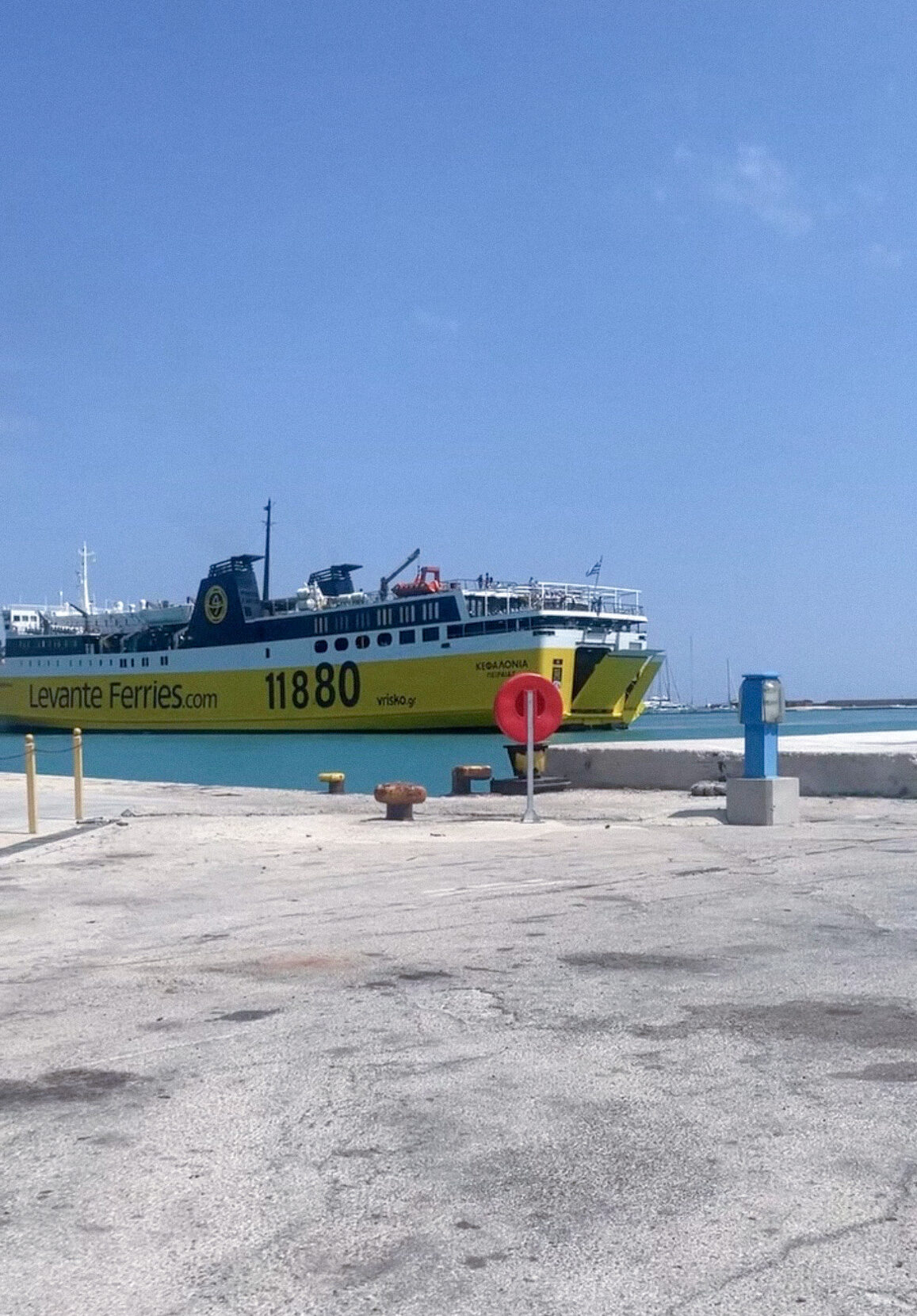
For many travelers, ferries are one of the highlights of visiting Greece. They’re the primary way to travel between the islands and are often the only option for reaching smaller islands that don’t have airports.
There are several major ferry ports throughout Greece, but the busiest is Piraeus, just outside of Athens.
Other popular departure ports include Rafina (convenient for some Cyclades islands and travelers arriving at Athens Airport) and Lavrio, as well as ports in Thessaloniki, Patras, and many of the larger islands.
There are two main types of ferries:
- Conventional ferries are slower but usually less expensive. They often have outdoor decks, cafeterias, lounges, and can transport cars, motorcycles, and larger vehicles.
- High-speed ferries get you to your destination much faster but typically cost more. Depending on the vessel, outdoor space may be limited, and the ride can feel bumpier when the sea is rough.
If you’re island hopping during the summer, I highly recommend booking your ferry tickets in advance, especially for popular routes and weekends. During the shoulder season, you’ll usually have more flexibility.
If you’re bringing a rental car, double-check that your rental agreement allows you to take the vehicle on ferries. Some companies prohibit it, while others require advance approval or additional insurance.
A few ferry tips:
- Arrive at the port 30–60 minutes before departure, especially if you’re traveling with a vehicle.
- Keep your ticket and ID handy, as they may be checked before boarding.
- If you’re prone to motion sickness, consider sitting toward the middle of the ferry or taking medication before departure, particularly on windy days.
- Don’t stress if boarding feels a little chaotic—crews are very experienced, and passengers are directed where to go. (Check out this blog post for a complete Greek ferry guide)
Grab your FREE
✨Ultimate Greece Travel Starter Guide!!!✨
Skip the overwhelm — I pulled together the must-knows so you don’t have to dig through a million sites.

By Train
Train travel in Greece is limited compared to other European countries. In Athens and surrounding areas, the Metro is the primary rail system.
The Athens Metro is:
- Reliable
- Efficient
- Affordable
- The easiest way to get around the city and to/from the airport
There are some rural and regional train routes elsewhere in Greece, but buses are generally more prevalent and practical for most travelers.
Taxis
Taxis are widely available throughout Greece, particularly in cities and tourist areas.
They can be convenient for late-night travel, short distances, or getting directly to and from the airport or your accommodation.
However, taxis can be expensive—especially if the driver does not use a meter. Always check that the taxi is equipped with a meter and that the meter is on before starting your ride.
Final Thoughts
The best way to get around Greece depends on where you’re going and how you like to travel.
Most trips involve using more than one type of transportation—for example, taking the Metro to the port, hopping on a ferry to an island, and then renting a car or using buses once you arrive.
Buses are perfect for budget-friendly trips, rental cars offer unmatched freedom, flights save time over long distances, and taxis fill in the gaps when convenience matters—especially in cities like Athens.
With a little planning, navigating Greece is simple and stress-free, leaving you more time to enjoy the journey itself.
Do you have any more questions about transportation in Greece?
Leave them in the comment section, and I’ll do my best to answer them!