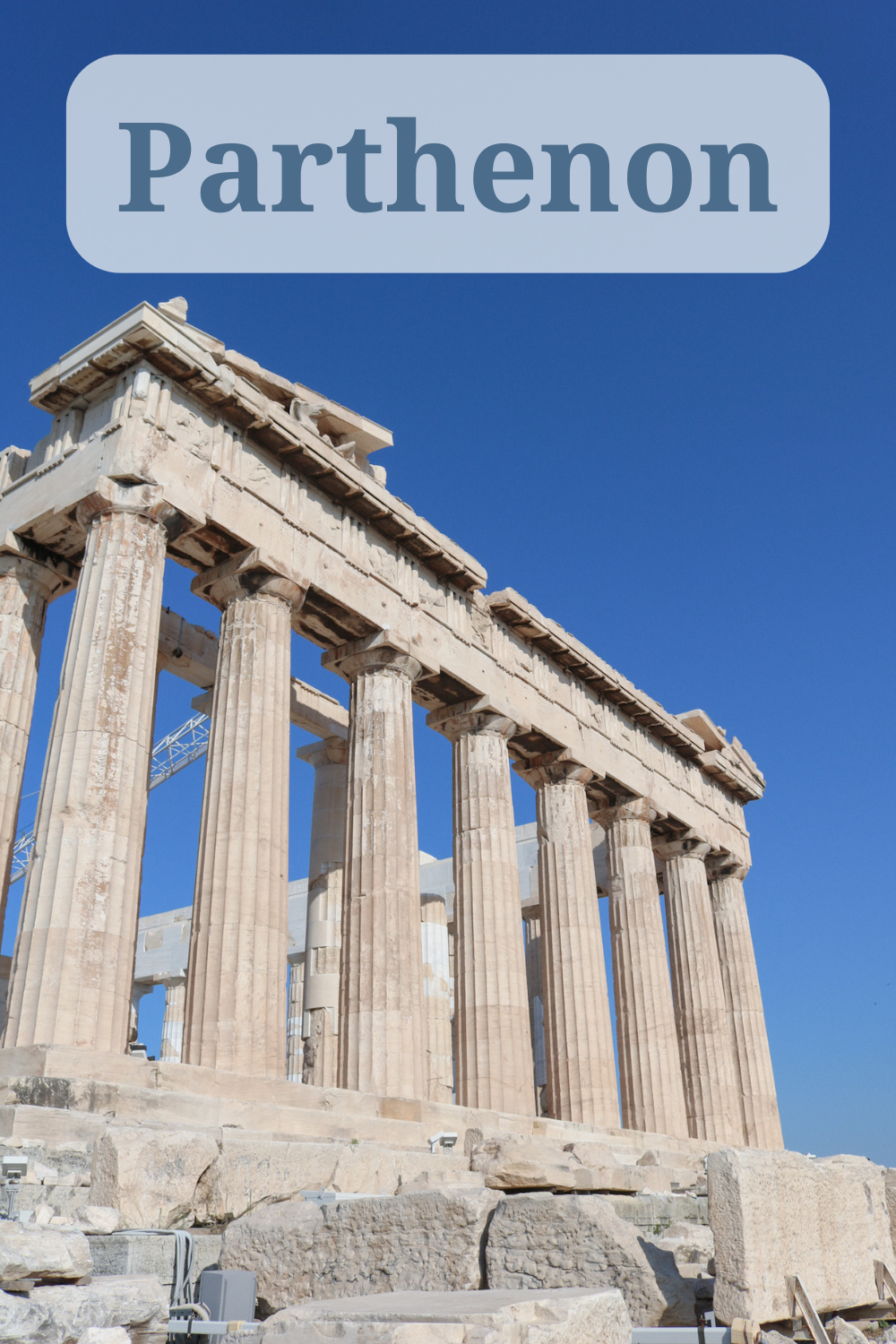

The Parthenon: The History, The Mythology, and the Symbolism
This post may contain affiliate links, that means if you use the links to purchase something I get a commission at no extra cost to you. Click here for more information about this.
The Parthenon is one of those places people think they already understand before they ever see it. A famous ruin. A postcard image. Something you “should” visit.
But standing before it in person tells a very different story.
This post is all about the Parthenon.
Parthenon
Because of how often I’ve been able to return to Greece, I didn’t see the Parthenon right away. And in hindsight, that delay revealed something important: the Parthenon doesn’t rely on hype. Each time you encounter it—at any age, with any level of interest in history—it becomes more meaningful.
That’s why I strongly recommend that anyone visiting Greece for the first time makes time to see it.
Many travelers only visit Greece once. Skipping Athens to spend more time on the islands is tempting, but missing the Parthenon means missing one of the most influential structures ever built.
You don’t need to spend days in museums or become an archaeology expert. Even an hour or two is enough to understand why this building has endured for thousands of years.
The Parthenon was constructed in the 5th century BCE as a temple dedicated to Athena, the patron goddess of Athens. According to myth, the city once had to choose between Athena and Poseidon as its protector.
Each offered a gift: Poseidon created a saltwater spring, while Athena offered an olive tree—useful, sustaining, and deeply connected to daily life. Athena’s gift won, and the city was named Athens in her honor.
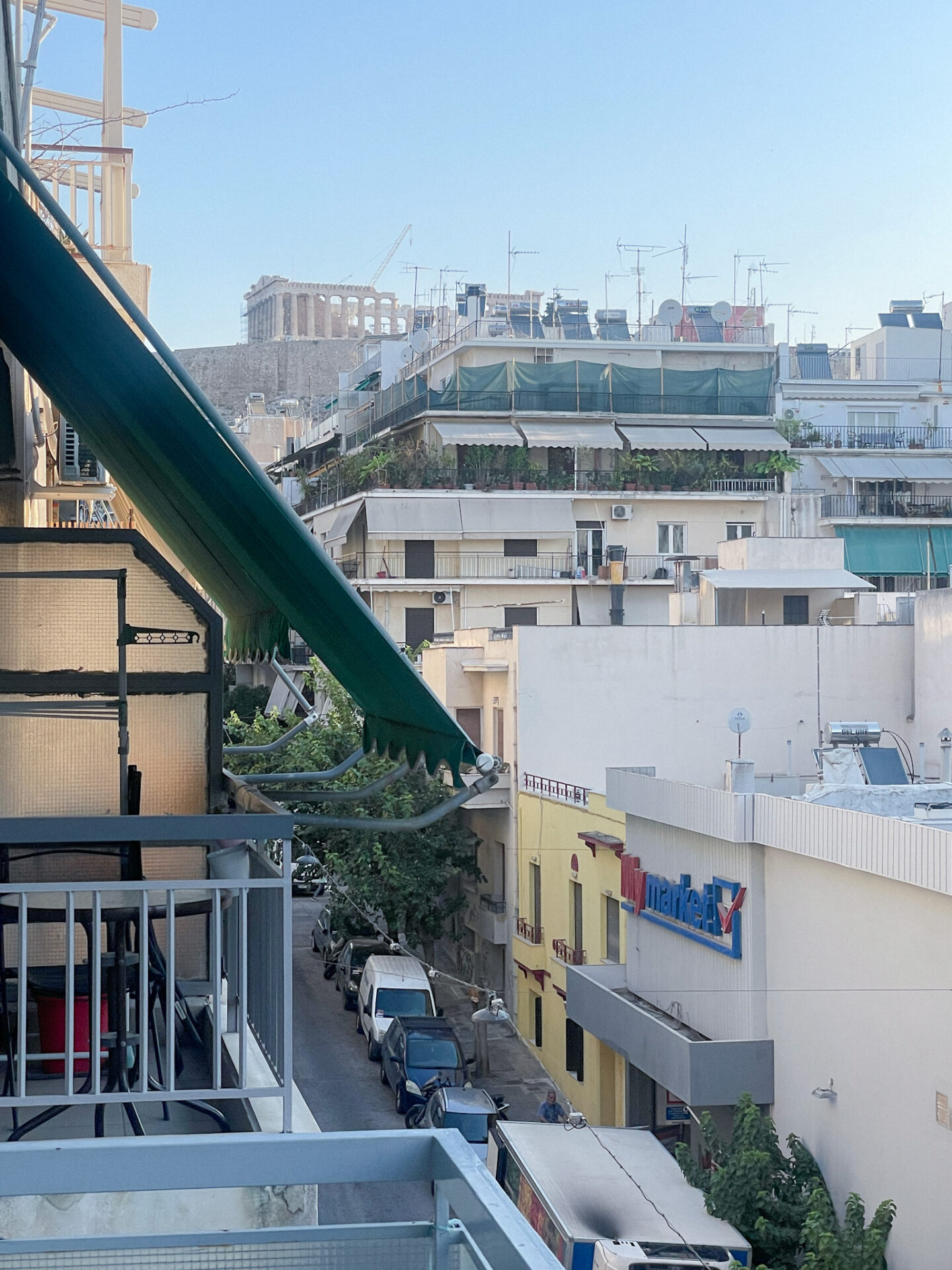
The Parthenon was later built atop the Acropolis, literally meaning “city-top.” From there, it overlooks modern Athens, creating a striking contrast between ancient ambition and contemporary life below.
Grab your FREE
✨Ultimate Greece Travel Starter Guide!!!✨
Skip the overwhelm — I pulled together the must-knows so you don’t have to dig through a million sites.
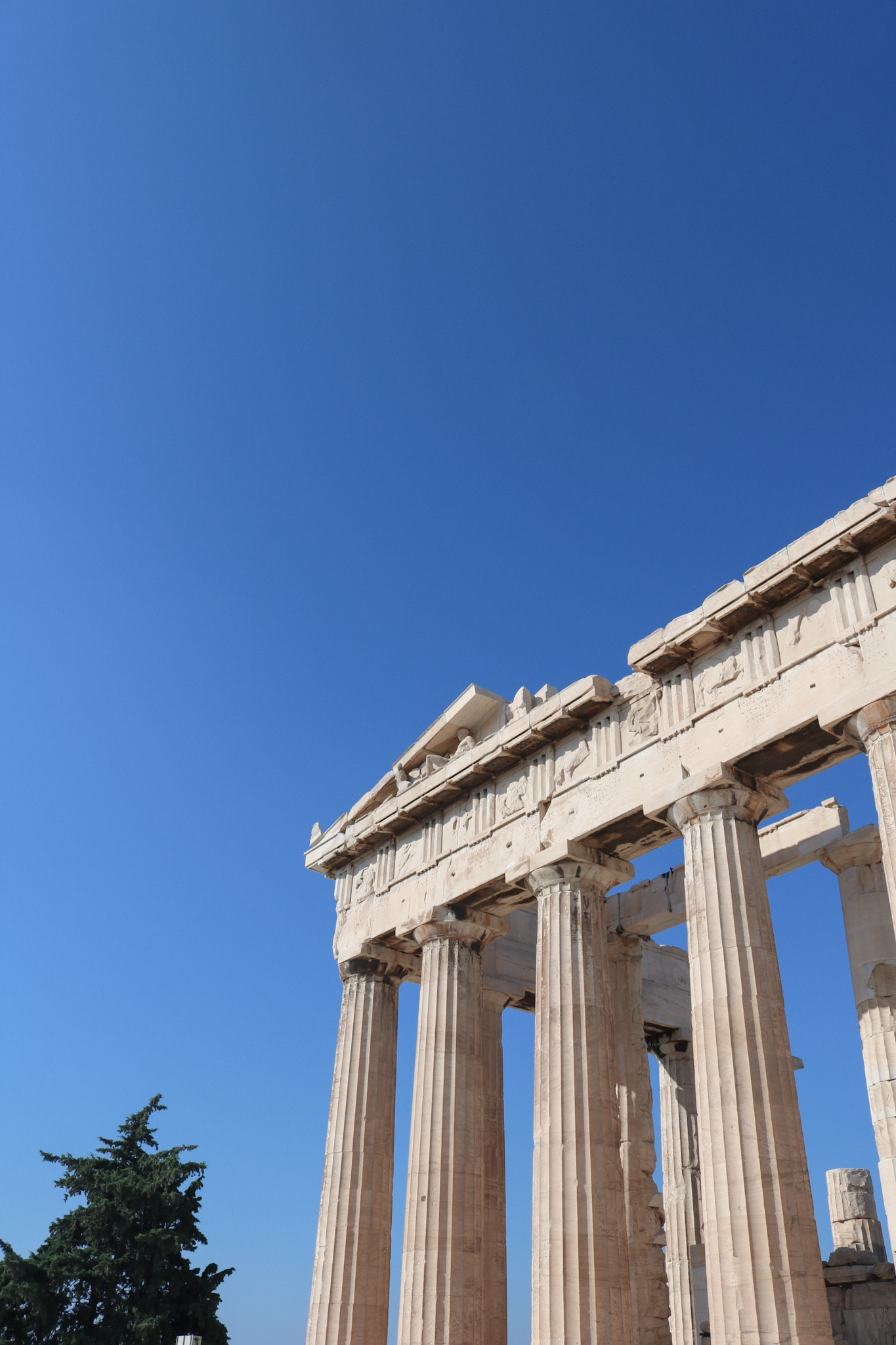
What makes the Parthenon especially powerful is not just its symbolism, but its construction. This massive structure was built without modern machinery—its marble blocks were hauled up the Acropolis hill by hand and assembled with extraordinary precision.
Thousands of years later, it is still standing.
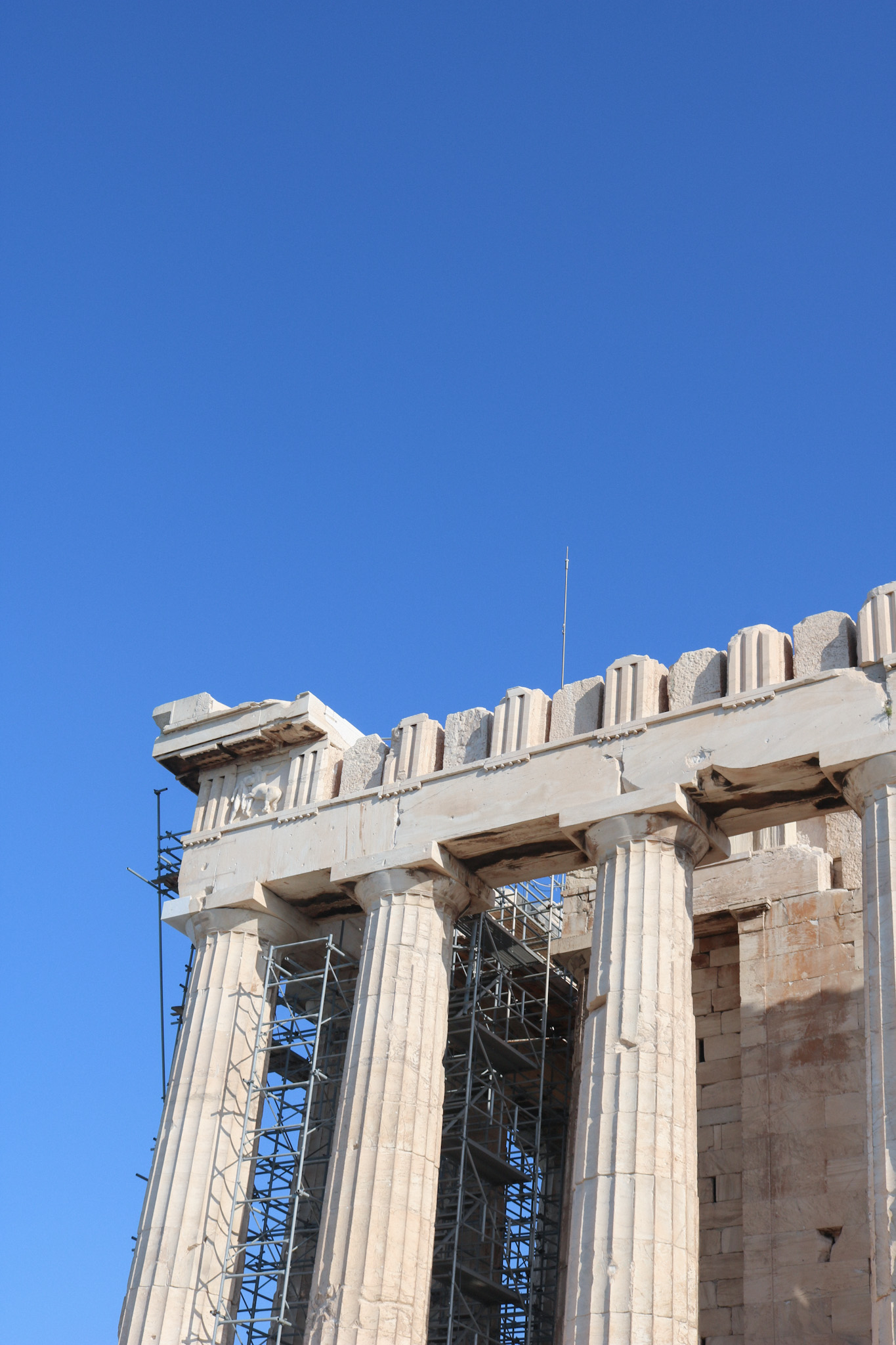
Equally remarkable is the ongoing effort to preserve and restore it. Restoration work has been carefully carried out over decades, and with recent scaffolding finally removed, the Parthenon is closer than ever to being seen unobstructed.
Each visit reveals new details and reinforces the care taken to protect this shared piece of human history.
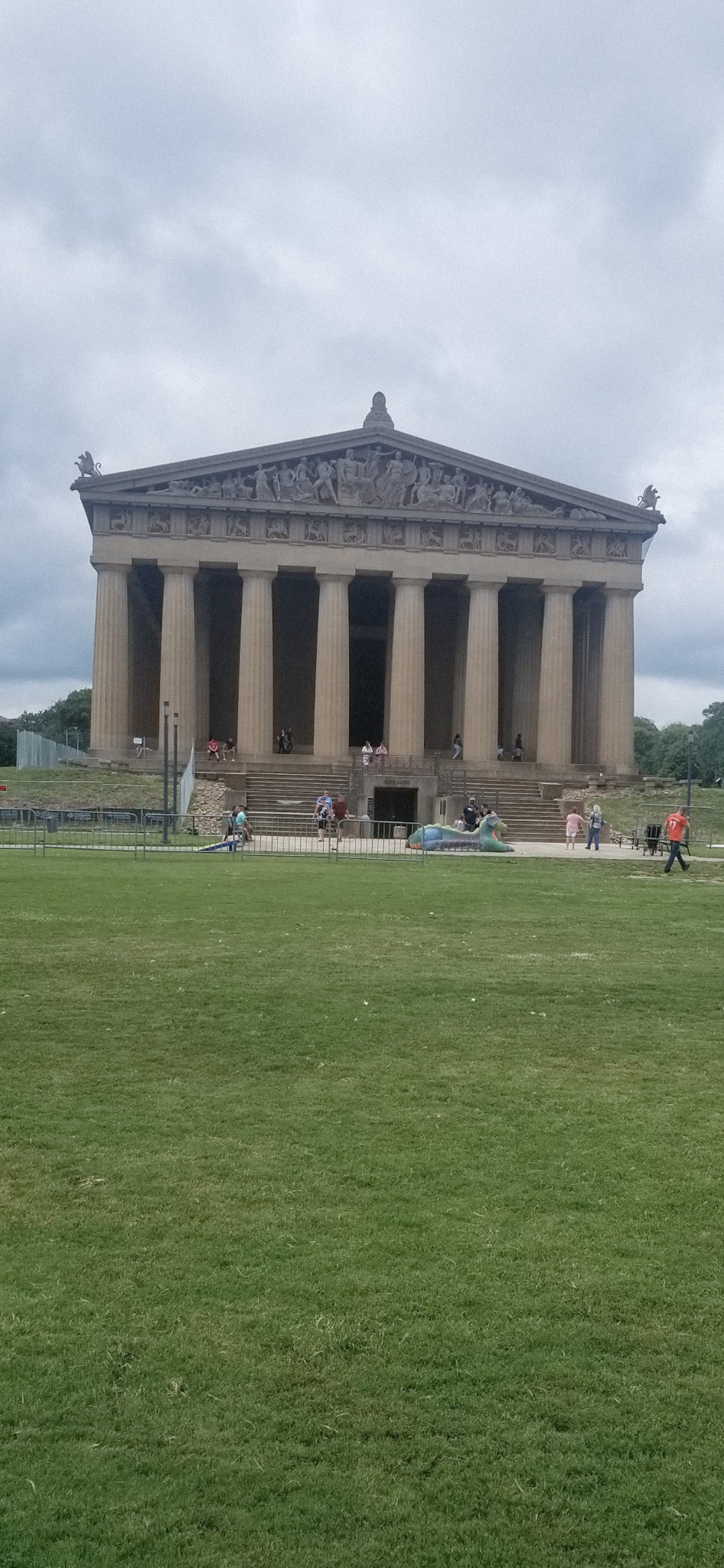
One way to better understand what has been lost—and what once existed—is by visiting the full-scale Parthenon replica in Nashville, Tennessee.
Unlike the original in Athens, visitors can enter the interior and see a full-size statue of Athena. Experiencing that space makes it easier to imagine the Parthenon not as a ruin, but as a vibrant, commanding structure dominating the ancient city.
Today, the Parthenon remains the most recognizable symbol of ancient Greece. It represents more than religion or architecture—it reflects ideas of beauty, balance, civic pride, and cultural influence that continue to shape the modern world.
Even for those who don’t consider themselves “history people,” the Parthenon has a way of leaving an impression. You don’t need deep knowledge to feel its impact. You just need to stand there.
If you’re going to Greece—even briefly—make the time to see it. Some places are famous for a reason.