

Greek Festivals in North America: The Closest Thing to Greece Without Leaving the Continent
This post may contain affiliate links, that means if you use the links to purchase something I get a commission at no extra cost to you. Click here for more information about this.
Walking into a Greek festival in North America can feel like stepping into a tiny pocket of Greece.
There are the familiar smells of grilled meats, sweet treats, and mezze dishes. The sound of Greek music, both old and new. And then there are the vibes: friendly Greek people working together in the booths, families catching up with each other, and Greek dancing happening at pretty much every opportunity possible.
Whether you’re attending your very first Greek festival, you’re a regular who goes every year, or you’re simply missing Greece, this is your guide to what you can expect.
And fair warning: you will probably leave hungry for a trip to Greece.
This post is all about Greek Festivals.
Greek Festivals
What Is a North American Greek Festival?
Greek festivals in North America are usually organized by a local Greek Orthodox church or Greek community. Most take place during the warmer months of the year, generally from late spring through early fall.
The people attending are a mix of pretty much everyone. There are first-timers who are curious about Greek culture, annual attendees who know exactly what they’re ordering before they even walk through the gates, Greek families, and people who may not be Greek at all but already know they love the food and atmosphere.
And while the food is definitely a major reason people come, a Greek festival is much more than a food fair.
It’s a little step into Greek culture.
You get Greek food, Greek music, Greek dancing, Greek religion, shopping, and, most of all, Greek community.
Greek festivals are one of my favorite parts of the year. I have actually left Greece early before just to make sure I was back in time for our festival.
I love sharing Greek culture, I will take pretty much any opportunity to Greek dance, and I just genuinely love the atmosphere. I tell everyone I meet about it. Customers, Uber and Lyft drivers, random people I end up talking to…pretty much anyone who will listen.
And during summers when I don’t make it to Greece, going to the festival makes me feel a little better.
It’s obviously not the same as being in Greece. But for a few days, it can feel surprisingly close.
Grab your FREE
✨Ultimate Greece Travel Starter Guide!!!✨
Skip the overwhelm — I pulled together the must-knows so you don’t have to dig through a million sites.
Come Hungry: The Food Is the Main Event
Let’s be honest: the food is one of the main reasons people attend Greek festivals.
Depending on the festival, much of the food is made by church members and volunteers, and there is something especially fun about eating food that feels a little closer to someone’s family kitchen than a typical restaurant.
My personal recommendation? Try everything.
Okay, maybe not everything if you’re only there for one day and would like to not have to call your doctor. But try anything that looks interesting to you.
If you’re not sure where to start, these are some of the foods that would be at the top of my list.
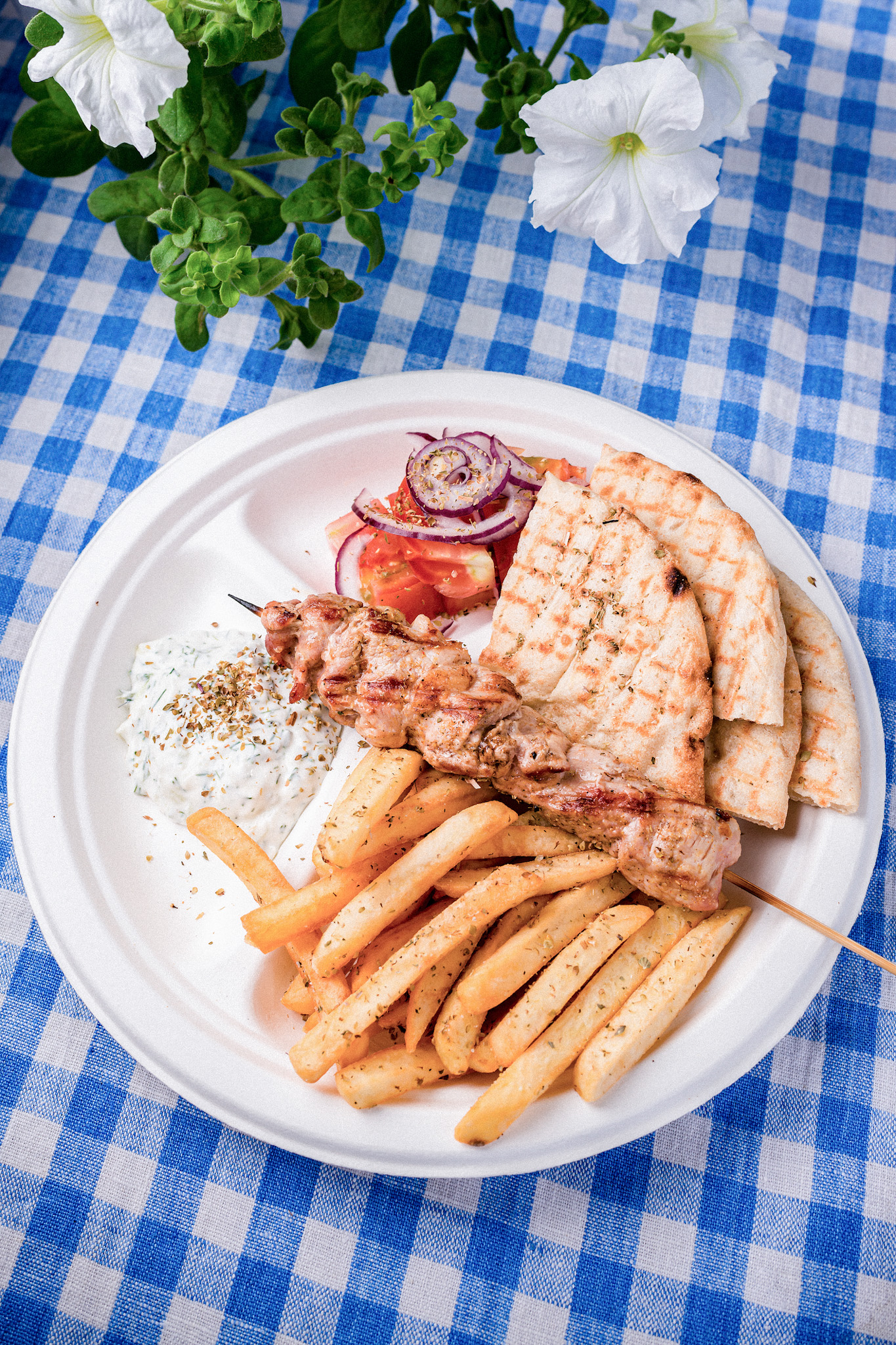
Souvlaki and Loukaniko
Souvlaki is grilled meat, often pork or chicken, served on a skewer or sometimes wrapped in pita depending on the festival.
Loukaniko is Greek sausage, and if you see it on the menu, I definitely recommend giving it a try.
Both are great options if you’re feeling slightly intimidated by ordering a giant gyro as your first Greek festival meal.
Gyros
A gyro is one of the most popular Greek festival foods for good reason.
The exact ingredients can vary, but you’ll usually find sliced meat tucked into pita with toppings like tomatoes, onions, tzatziki, and sometimes fries.
It is messy. It is delicious. You will probably need more napkins than you think.
Spanakopita and Tiropita
These are flaky little filo dough pies.
Spanakopita is filled with spinach and cheese, while tiropita is all about the cheese.
Honestly, filo dough could probably wrap around almost anything and I would eat it, but these little triangle pies are classics for a reason.
Moussaka and Pastitsio
If you’ve never tried either of these, think Greek comfort food.
Moussaka is made in layers and often includes eggplant, potatoes, ground meat, and a creamy béchamel topping.
Pastitsio is sometimes described as Greek lasagna, although that description doesn’t really do it justice. It typically has layers of pasta, seasoned ground meat, and béchamel.
If you’re looking for something that feels like a full, comforting meal, either one is a great choice.
Greek Salad
And yes, I mean an actual Greek village salad.
No lettuce. Sorry to every restaurant that has been putting lettuce in there.
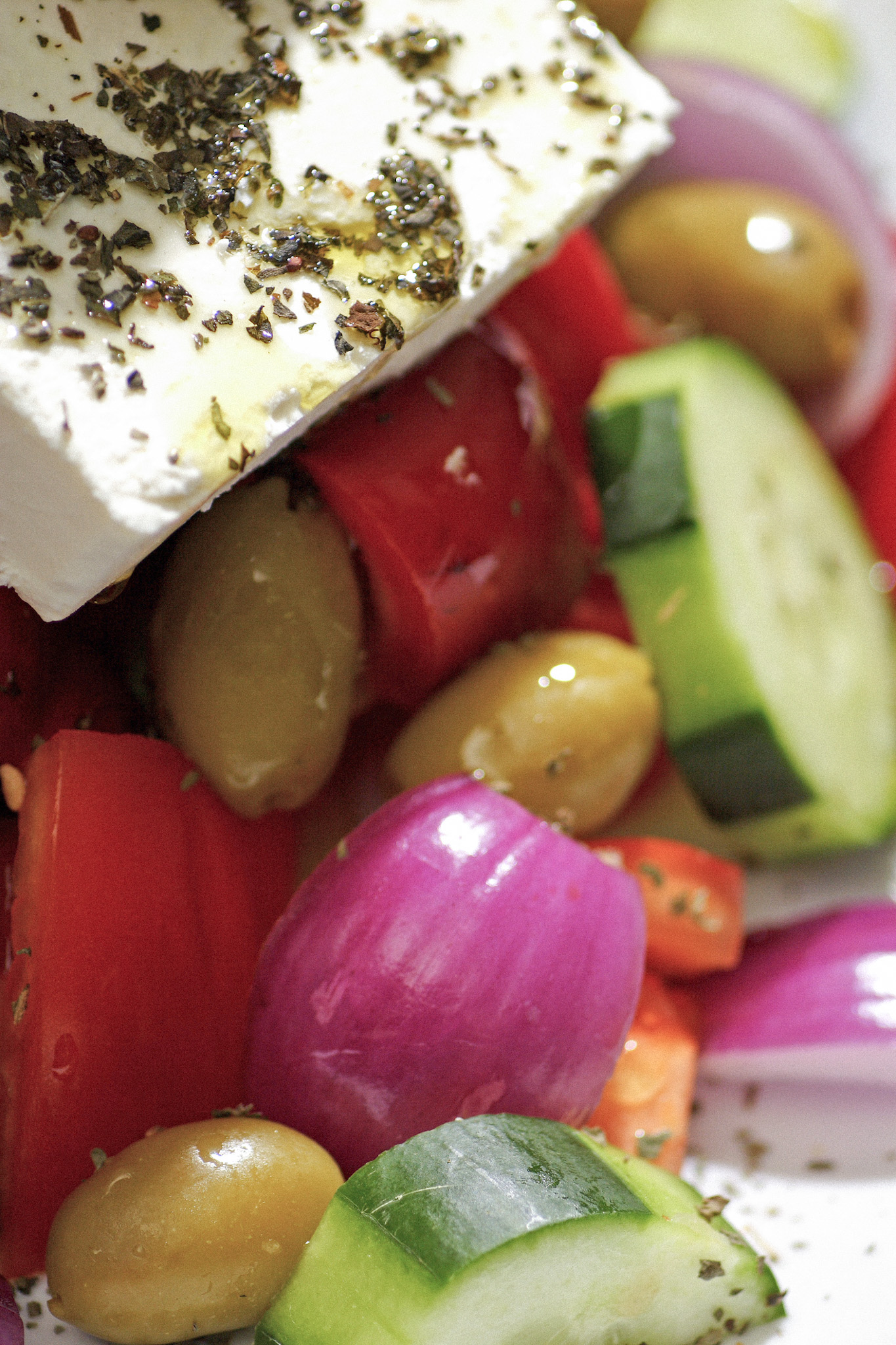
A traditional horiatiki usually includes tomatoes, cucumbers, onions, olives, and feta, along with olive oil and seasonings. Simple, fresh, and somehow always better than it has any right to be.
Save Room for Dessert!
I know I just told you to eat all the food.
But please save room for dessert.
Greek festivals tend to have an entire pastry section, and walking away without trying something sweet would be a mistake.
Baklava
Baklava is probably the most famous Greek pastry, and for good reason.
It’s made with layers of flaky filo dough, nuts, and sweet syrup or honey.
If you’re attending your first Greek festival and have no idea where to begin with dessert, baklava is a pretty safe place to start.
Galaktoboureko
This is my personal favorite Greek pastry.
Galaktoboureko is made with creamy semolina custard wrapped in filo and soaked in a sweet syrup.
I genuinely don’t understand why it isn’t more famous.
Kourabiedes
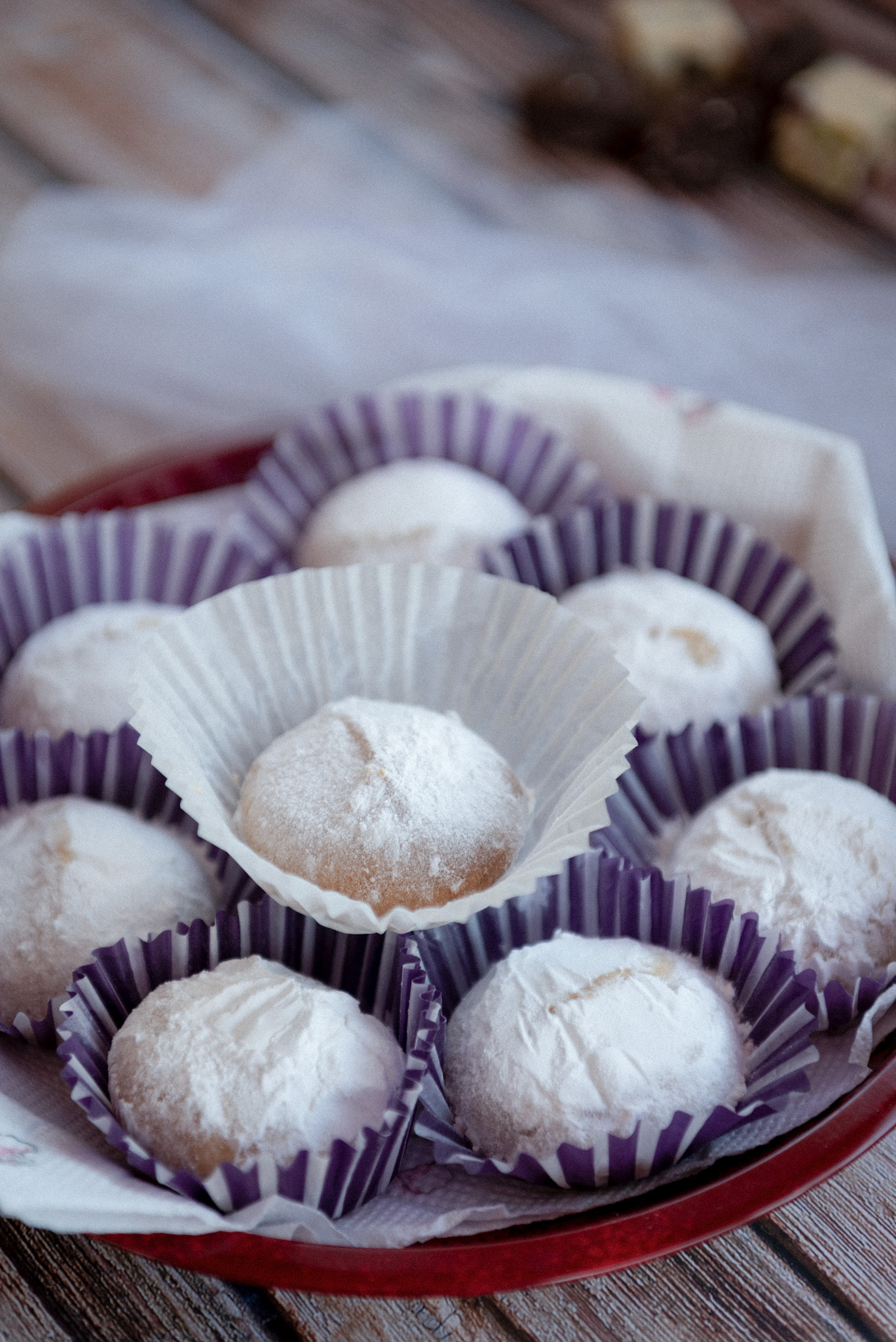
Kourabiedes are buttery Greek cookies absolutely covered in powdered sugar.
And when I say covered, I mean covered.
They are low-key a choking hazard if you inhale at the wrong moment, but they are so good.
Also be careful if you think you’re about to sneeze. You might accidentally blow half of the powdered sugar off the cookie, which is sad, not to mention messy.
The point is, they are messy to eat, but absolutely delicious.
Melomakarona
Melomakarona are soft, spiced cookies soaked in syrup and usually topped with chopped walnuts.
They’re especially associated with Christmas, but if you find them at a festival, I’m not going to tell you not to eat one.
Or five.
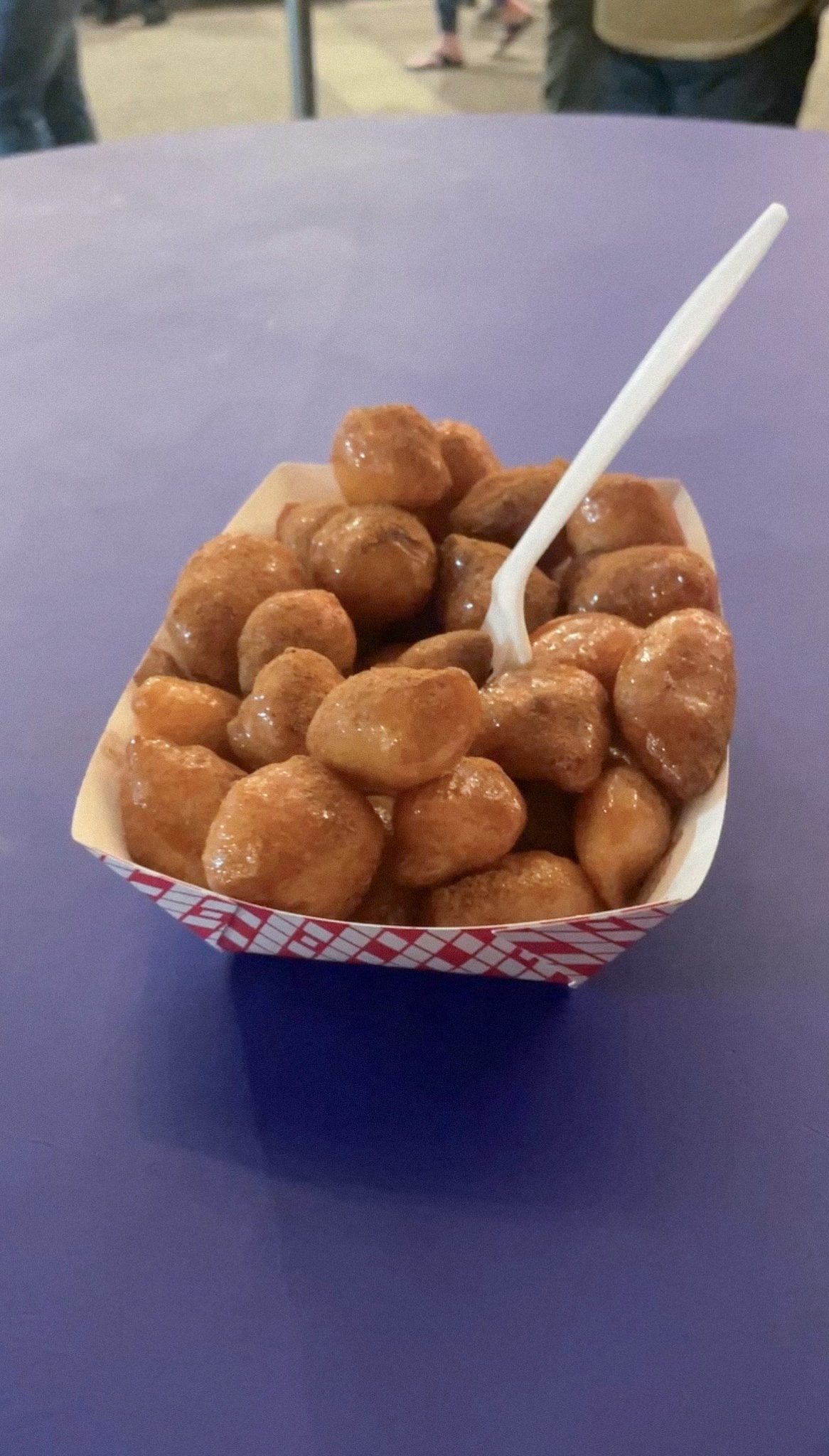
Loukoumades
Loukoumades are my all-time favorite Greek festival treat.
They’re little fried dough bites that are usually topped with honey and cinnamon. Depending on where you get them, you might also find additional toppings like chocolate syrup and crushed nuts.
And when it’s not festival season in Portland, I get them all the time from my brother’s food truck, Yanni’s Greek Donuts.
I may be slightly biased, but they are the best!
Don't Skip the Coffee Booth
The coffee booth might not have the same immediate appeal as a table full of pastries, but don’t skip it.
Two of the drinks you may find are Greek coffee and frappes.
Greek coffee is a small, strong coffee served in a little cup. It’s brewed with very finely ground coffee, and the grounds settle at the bottom, so don’t take the last sip expecting a normal mouthful of coffee.
If you prefer something cold and creamier, try a frappe.
A Greek frappe is traditionally made by shaking or whipping instant coffee with water to create that signature foam, then serving it over ice. You can order it with different levels of sweetness, and some versions include milk.
Either way, Greek festivals are not the place to skip the caffeine.
You’re going to need energy for all the food and dancing.
Grab your FREE
✨Ultimate Greece Travel Starter Guide!!!✨
Skip the overwhelm — I pulled together the must-knows so you don’t have to dig through a million sites.
The Greek Dancing: My Favorite Part
The best part of any Greek festival for me is the Greek dancing.
I think it’s some of the best entertainment at the festival, although I may be a little biased.
If it’s my church’s festival, you’ll probably find me performing on stage with the adult Greek dance group.
But I also fully support a Greek dance “flash mob” at any possible opportunity.
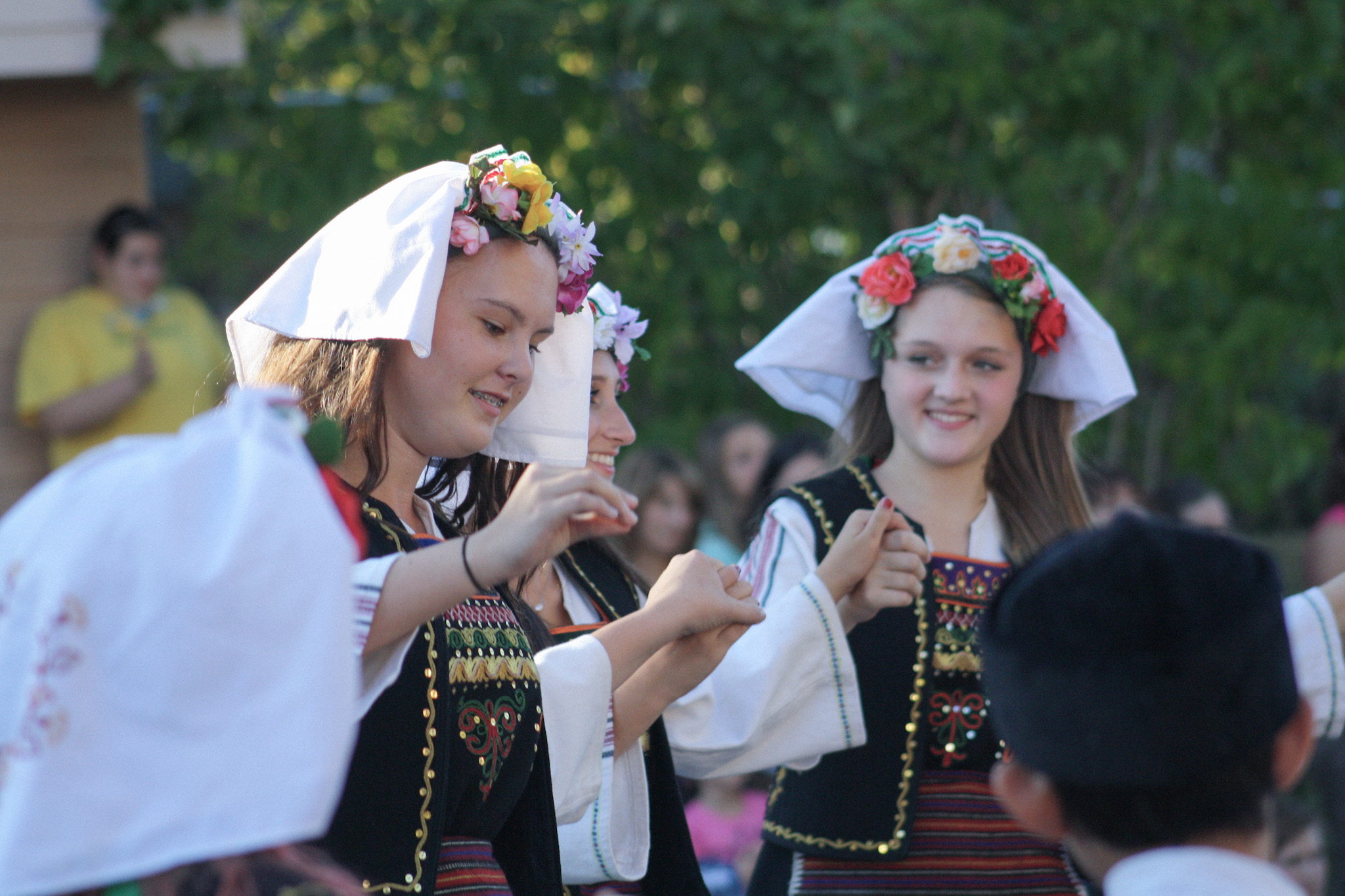
Greek dance performances are often divided into different suites or groups of dances. These may focus on a specific region of Greece because different regions have their own dances, music, styles, and traditions.
The dances can feel very different depending on where they’re from. Some island dances have lighter, bouncier movements, while many mainland dances have heavier, more grounded steps. Of course, there are exceptions because Greece has a lot of regional dance traditions.
At festivals, though, we also tend to perform crowd favorites and high-energy dances from all over Greece.
Each age group may wear a traditional costume (or costumes) representing a specific region.
The costumes themselves are part of the story, too. Different regions have completely different traditional clothing, from lighter island styles to heavier garments associated with mountainous areas.
And yes, they can get very warm.
Especially when you’re dancing.
Especially in the summer.
Greek Dances You May See
There are hundreds of Greek dances, so this is definitely not a complete list, but here are a few you may recognize at a Greek festival.
Kalamatianos is one of the most well-known Greek circle dances. It’s often danced while holding hands and follows a recognizable twelve-step pattern.
Zembekiko is very different from the group and circle dances you may see at a festival. It is traditionally an individual, improvised dance, so the dancer has more freedom to interpret the music in their own way.
Pentozali is a high-energy Cretan dance that can get increasingly intense and includes fast steps and impressive jumps.
Depending on the festival, you might also see dances from regions such as the Peloponnese, Epirus, Thrace, Macedonia, Pontus, Crete, and the Greek islands.
One of my favorite things about Greek festivals is that at the end of a performance, there is often an opportunity for visitors to learn a Greek dance.
And sometimes I join in on this, too, because I will take pretty much any opportunity to Greek dance.
One of my absolute favorite Greek festival moments happens near the end of the day when we basically hijack the sound system and start a Greek dance flash mob.
Dancers from all age groups join in. Parents join. Grandparents join. Sometimes even the church priests join.
One of my favorite memories was when one of the priests threw napkins into the air while we were dancing.
Traditionally, celebratory throwing is more associated with things like flower petals, and sometimes money, depending on the setting and tradition. So seeing napkins flying through the air while everyone was dancing was hilarious.
And honestly? A pretty perfect Greek festival moment.
Take the Church Tour
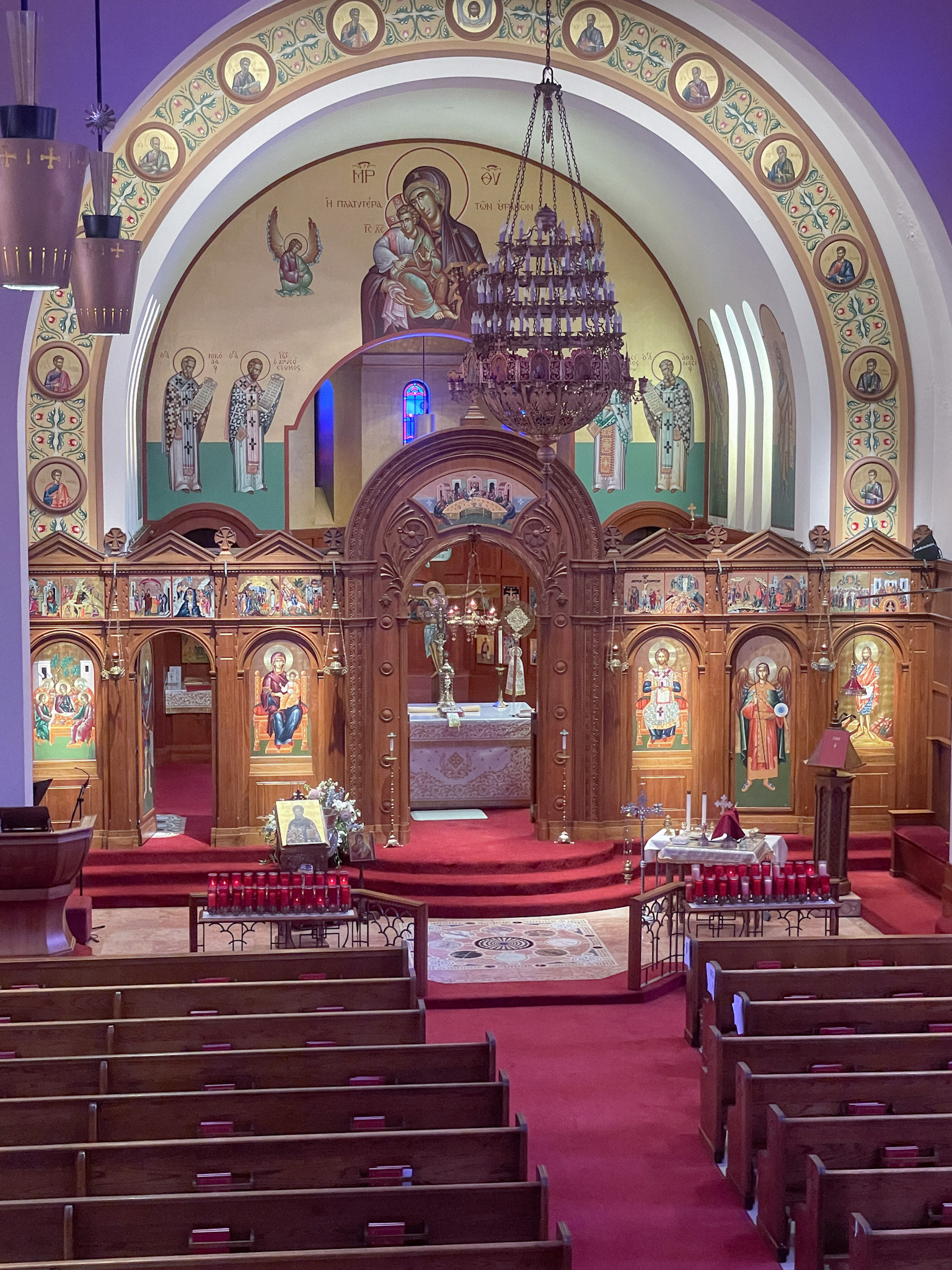
Greek Orthodox churches are some of the most beautiful buildings you can visit.
Even if you have no interest in learning about the religion itself, I would still recommend taking a quick look inside.
The iconography covers the walls, the altar area is ornate and detailed, and the entire space is beautiful to experience.
Many Greek festivals offer church tours for visitors who want to learn more. These tours can explain what you’re looking at, the symbolism behind some of the icons and features of the church, and the basics of Greek Orthodox history and traditions.
If you do visit the church, just remember to be respectful.
Keep your voice down, follow any photography rules, and don’t bring food or drinks into the sanctuary.
Even a quick walk inside can give you another perspective on the Greek community that is hosting the festival.
Go Shopping
After you’ve eaten your body weight in souvlaki and pastries, there is usually some shopping to do, too.
Depending on the festival, you might find:
- Handmade jewelry
- Greek crosses and religious items
- Icons
- Olive oil
- Honey
- Greek herbs and spices
- Ceramics
- Greek-themed clothing and merch
- Evil eye charms
- Other handmade and imported items
It is a great opportunity to find something a little different while supporting vendors and, depending on the festival, local community organizations.
Just maybe don’t go in telling yourself you’re “only looking.”
That rarely ends well.
Grab your FREE
✨Ultimate Greece Travel Starter Guide!!!✨
Skip the overwhelm — I pulled together the must-knows so you don’t have to dig through a million sites.
Tips for First-Time Greek Festival Visitors
Arrive Early
There are busy times when entrance lines can get long, and popular foods and pastries may sell out.
Saturday evenings, especially, can be some of the busiest times.
If there’s something specific you really want to try, I would get there earlier rather than hoping it will still be available later.
Wear Comfortable Shoes
You’ll probably be standing, walking, wandering between food booths, shopping, and hopefully dancing.
Comfortable shoes are always the right choice.
Go With Friends...or Don't
Greek festivals are fun with a group, but they are also surprisingly easy to enjoy alone.
People tend to be chatty, and there is always something happening to watch or do.
So if you don’t have anyone to go with, I wouldn’t let that stop you.
Stay for the Evening
The atmosphere can get even better after the dinner rush.
The lights come on, the music keeps playing, and there is usually still plenty happening.
If you have the time, don’t rush through the festival.
Stay awhile.
If You Miss Greece, or You're Curious About It, Start Here
Whether you already have a connection to Greece or you’re simply curious about the culture, a Greek festival is a pretty great place to start.
You get the food, the music, the dancing, the traditions, and that sense of community that is such a big part of Greek culture.
Will it replace an actual trip to Greece?
Unfortunately, no.
You will still probably find yourself looking at flights afterward.
But Greek festivals are a beautiful way to connect with—or reconnect with—Greek culture without leaving North America.
You might arrive because you heard the food was good.
But you will leave with a full stomach, a bag of pastries and Greek goodies, and a sudden urge to book a flight to Athens.
Honestly, that sounds like a perfect day to me.