

Buses in Greece: What to Expect Before You Ride

This post contains affiliate links, that means if you use the links to purchase something I get a commission at no extra cost to you. Click here for more information about this.

If you don’t know what to expect, taking a bus in Greece can feel very chaotic.

At first, it can seem like there is no rhyme or reason to anything. People are getting on and off, luggage is being loaded underneath the bus, someone is asking you where you’re getting off, and you’re standing there wondering if you’re actually doing everything correctly.

But there is a system to it.

Once you understand how buses in Greece work, they are actually one of the easiest and most affordable ways to travel around the country

And because the bus network reaches so many places that aren’t accessible by train, knowing how to use it can open up a lot more of Greece.

buses in Greece

Buses in Greece

Why Take the Bus in Greece?

Buses are one of the cheapest transportation options in Greece—and depending on where you’re going, they may be the cheapest option.

There is an extensive network connecting cities, towns, villages, and destinations throughout the country. 

Honestly, the only places where you generally won’t find a bus route are car-free islands, such as Hydra, or very remote villages and hidden gems tucked away somewhere in the mountains.

I use buses essentially every single time I go to Greece.

Greece Travel Guide

Grab your FREE
✨Ultimate Greece Travel Starter Guide!!!✨

🌍 Skip the overwhelm — I pulled together the must-knows so you don’t have to dig through a million sites.
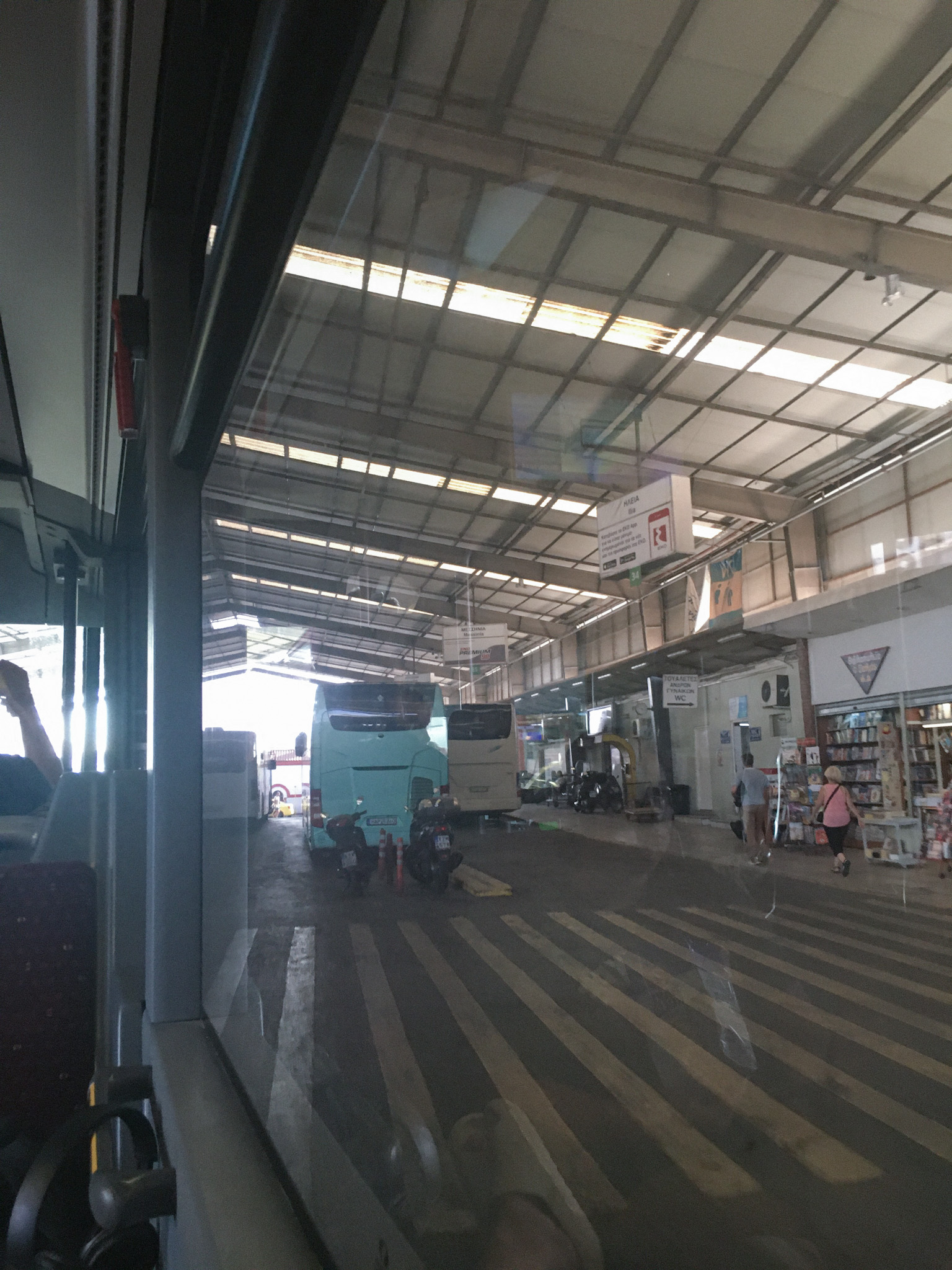
When I’m traveling from Athens to the western side of the country, the bus is usually how I get there. For longer journeys, the larger intercity buses are surprisingly comfortable, and there is something nice about sitting back and watching the Greek countryside go by.

Or taking a nap after a long travel day (me because I struggle to sleep on planes).

The bus is also a great alternative if you don’t want to rent a car

Driving in Greece can be a little tricky, especially if you’re not a confident driver. Between narrow roads, busy cities, mountain roads, and the general unpredictability of driving in some places, I don’t really recommend it for timid drivers.

Renting a car can also be expensive, especially during peak tourist season and when renting outside of Athens. Also, if you are renting a car outside of Athens, they may not have any automatic transmission cars available, so if you don’t know how to drive a stick, that can throw a wrench in your plans.

Taking the bus can save you a significant amount of money while still allowing you to see a huge portion of Greece.

The Two Main Types of Buses in Greece

I take both types of buses pretty much every time I visit Greece.

I typically use KTEL buses when I’m traveling across the country from Athens, while city buses are useful for getting around cities, towns, and some islands.

KTEL Intercity Buses

KTEL buses are the larger intercity buses that connect cities and towns throughout Greece.

These are usually coach-style buses designed for longer journeys, and they’re generally pretty comfortable. Many routes have assigned seating, although the exact setup can depend on the route and bus company.

If you’re traveling with a suitcase, it will go in the luggage bay underneath the bus.

These are the buses I use most often when traveling longer distances, especially between Athens and other parts of mainland Greece.

buses in Greece

City Buses

City buses are used within larger cities like Athens and Thessaloniki, but you’ll also find local bus routes throughout Greece.

Almost every town has at least one bus stop or route.

These buses make more frequent stops and can get crowded, particularly during rush hour.

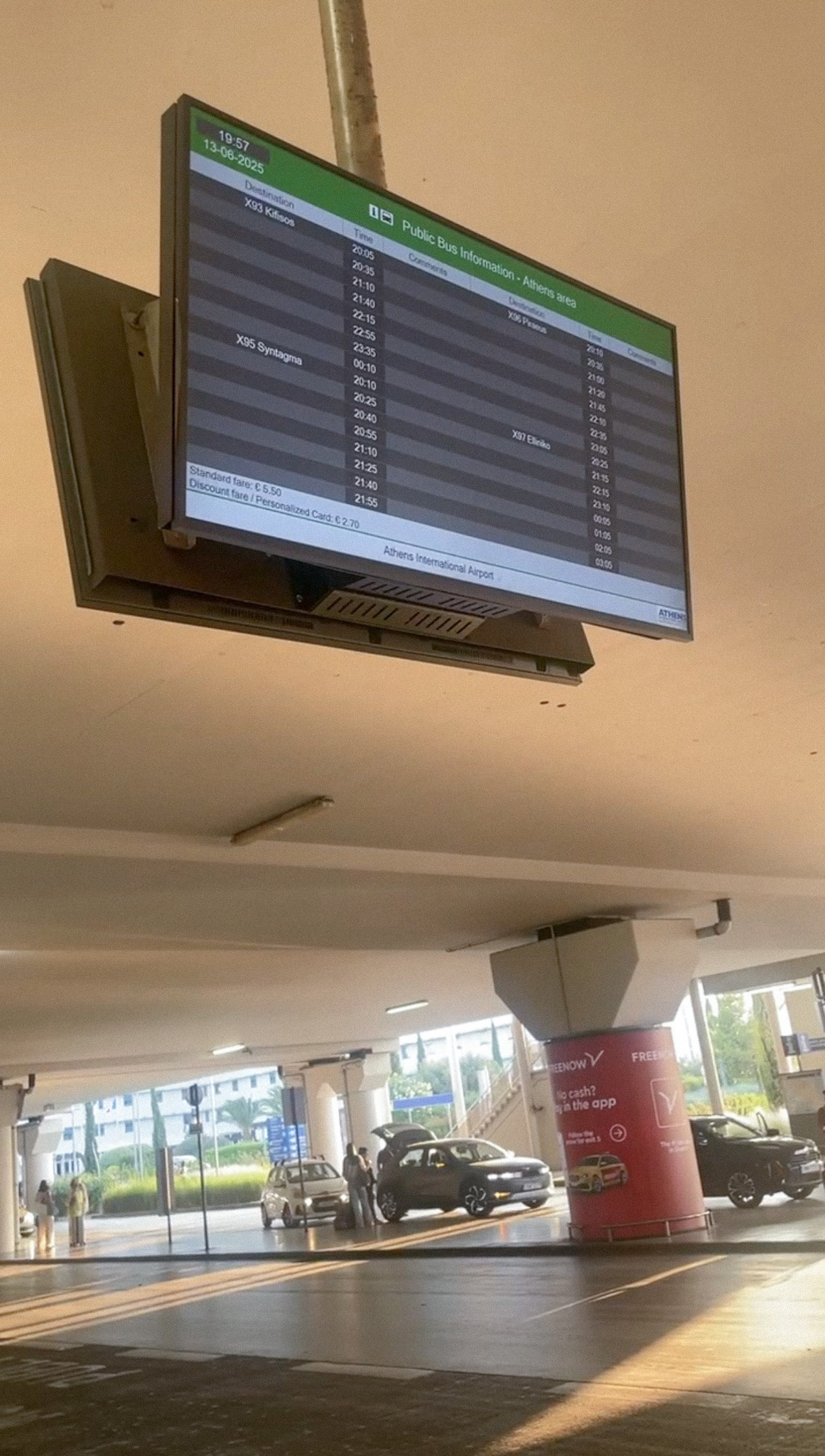
If you arrive in Athens during rush hour and take a city bus from the airport, there is a very real possibility that you might be standing for a good portion of the ride.

It’s slightly annoying, but it also helps keep you awake until you get to your destination.

And because people are constantly boarding and getting off, there’s a good chance you’ll eventually find yourself a seat.

City buses are also incredibly useful for reaching neighborhoods and areas outside of the main tourist center.

Buying Bus Tickets in Greece

Most of the time, I buy my bus ticket at the station.

Depending on where you are, you can usually purchase your ticket from someone working at the ticket booth or from a ticket machine.

I have also bought tickets online a couple of times when I really wanted to make sure I got a spot on an express bus. The websites can sometimes feel a little… juvenile, but I’ve never had any sketchy issues with them.

Personally, the way I travel usually makes more sense for me to wait until I’m actually ready to board the bus.

Travel can be unpredictable, and I don’t always want to commit to a specific departure time if I don’t have to.

That said, you should consider buying your ticket in advance if you’re traveling during a busy period or taking a popular route.

Express buses and routes to popular destinations can sell out, particularly during summer holidays. Morning departures can also be especially popular if people are taking day trips.

Arrive Early

If you still need to buy your ticket, give yourself a little extra time.

Both the ticket machines and ticket booths can have lines, so take that into account.

Larger bus stations can also feel overwhelming when you first arrive, and it might take you a few minutes to figure out where your bus is actually leaving from.

And then there are the smaller towns.

Sometimes there isn’t a clearly marked bus station, and you may find yourself wondering where exactly you’re supposed to wait.

When in doubt, ask a local.

Someone will almost always be able to point you in the right direction.

Keep Your Ticket Handy

On larger intercity buses, you’ll typically need to show your ticket when boarding.

On smaller city buses, you may need to scan or validate your ticket, depending on the local transportation system.

Don’t shove your ticket into the bottom of your bag immediately after buying it.

Keep it somewhere easy to reach.

Round-Trip Tickets Can Save You Money

Bus tickets in Greece are generally very affordable, especially compared to renting a car.

If you already know when you’re returning, it’s also worth checking whether buying a round-trip ticket will save you money. You can often get a discount compared to purchasing two separate one-way tickets.

Greece Travel Guide

Grab your FREE
✨Ultimate Greece Travel Starter Guide!!!✨

🌍 Skip the overwhelm — I pulled together the must-knows so you don’t have to dig through a million sites.
What It's Like Riding a Greek Bus

The Organized Chaos

Greek buses can feel chaotic.

But there is absolutely a system.

You just might not understand that system during your first five minutes at the bus station.

There isn’t an organized process where everyone waits politely to leave row by row like you’re getting off an airplane.

When the bus arrives at its destination, people get up and leave.

That’s it.

Just try not to intentionally block someone’s path, and you’ll figure it out.

Another thing that might catch you off guard is the person handling the luggage underneath the bus.

They may sound like they’re mad at you.

They’re probably not.

They just want to know where you’re getting off so they can load and stack the luggage accordingly.

There is a method to the madness.

After a ride or two, you start understanding the rhythm of it all.

Watching Greek Bus Drivers Is an Experience of Its Own

You will be amazed by the places Greek bus drivers can fit a full-sized bus.

Think narrow village streets, tiny corners, and streets with cars parked every which way they can legally—and sometimes illegally—park.

Thankfully, most people do obey the one rule about not parking on certain corners so the buses can actually make their turns.

Somehow, though, the drivers always seem to make it.

I have watched buses maneuver through situations that still raise my heart rate to this day.

Personally, I try not to pay too much attention to the front of the bus until we’ve escaped the crowded city streets.

But if that kind of thing excites you—or you’re a master at driving Rainbow Road in Mario Kart—you might actually enjoy watching the bus driver maneuver their way through Greece.

Getting On and Off the Bus

Getting off a bus in Greece can sometimes feel like every person for themselves.

It’s not considered rude.

It’s simply the way things work.

If possible, let passengers get off before trying to board, and have your belongings ready before your stop so you’re not digging through your bag while everyone else is trying to leave.

On longer bus rides, I’m rarely in a rush once I reach my destination.

I usually stay in my seat and gather my belongings while everyone else exits the bus.

Then, once things have calmed down a little, I get off, walk to the other side of the bus to collect my luggage, and go on my way.

buses in Greece

Luggage Rules for Buses in Greece

Large luggage goes underneath the bus.

And yes, that generally includes carry-on-sized suitcases. They’re usually too large to bring onto the bus with you.

Smaller bags, backpacks, and purses can come on board.

Some buses have overhead storage areas, but don’t expect the large overhead bins you would find on an airplane. These are generally better suited for backpacks, purses, and smaller items.

Some buses have overhead shelves, while others don’t.

Keep Your Valuables With You

I recommend keeping anything important with you rather than placing it in your suitcase underneath the bus.

That includes things like your:

  • Passport
  • Wallet
  • Medications
  • Phone
  • Electronics
  • Anything else you would be upset to lose

Unless you’re getting off at the first stop, there will probably be other stops before you reach your destination.

While someone accidentally—or intentionally—taking your luggage has never happened to me or anyone I know, there is always a possibility when people are getting off the bus and luggage is being removed.

If you’re particularly worried about your suitcase, you can put a lock on it.

Personally, I never have.

What I do recommend is putting an AirTag or another luggage tracker inside your suitcase so you can make sure your luggage stays where you’re supposed to be going.

Also, especially on crowded city buses, make sure your luggage is secure (especially your backpack/purse that has your valuables that are susceptible to pick-pocketing). 

Taking an extra second to find your wallet in your bag is better than keeping it in your pocket and maybe having it stolen from you (a very real thing that happened to me).

Wi-Fi and Charging on Greek Buses

Some buses offer Wi-Fi, but I wouldn’t rely on it.

When Wi-Fi is available, it may be limited to a certain amount of time or a specific amount of data.

I’ve also found that internet access can be unpredictable depending on where you’re traveling.

Before getting on the bus, download anything you might need.

That includes:

  • Maps and directions
  • Entertainment
  • Music or podcasts
  • Tickets
  • Anything else you don’t want to rely on Wi-Fi to access

Some newer buses also have USB charging ports, but again, I wouldn’t depend on them.

A power bank is always a good idea.

Expect Plenty of Stops

Highway Routes and Toll Booths

If you’re traveling on one of Greece’s modern highways, you’ll likely encounter toll booths along the way.

Don’t be surprised if the bus slows down or stops briefly.

Nothing is wrong.

The driver is simply passing through the toll.

Many buses now use a scannable device or electronic system, which means the bus often slows down, the device is scanned, and you’re immediately on your way again.

Greece Travel Guide

Grab your FREE
✨Ultimate Greece Travel Starter Guide!!!✨

🌍 Skip the overwhelm — I pulled together the must-knows so you don’t have to dig through a million sites.

City Driving Means More Stops

City buses obviously involve a lot more stopping and starting.

There is traffic, passengers constantly getting on and off, and frequent stops along the route.

It’s all part of getting around a busy Greek city.

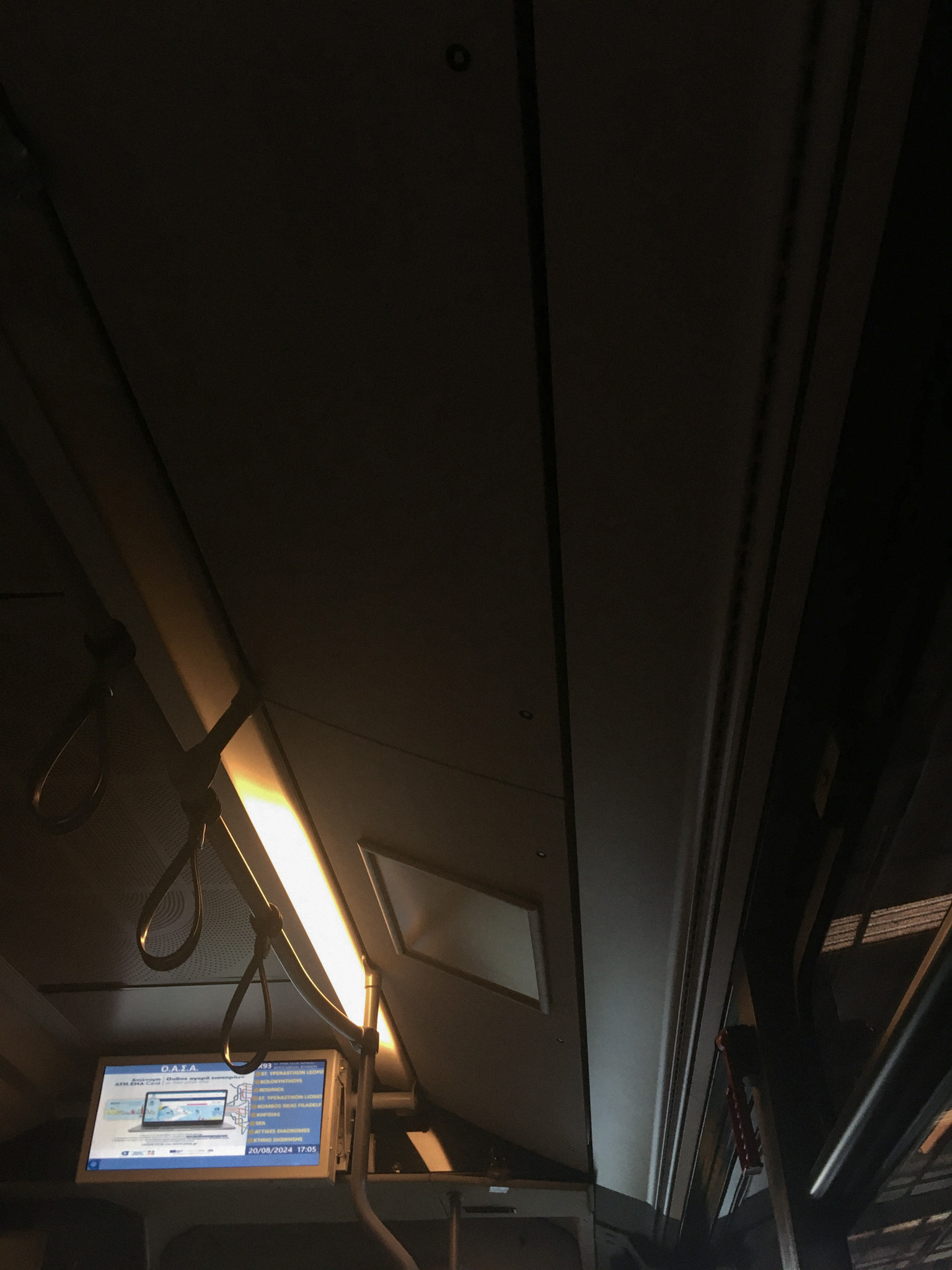
You can actually keep track of how many stops there are until yours on the screen at the front of the bus. 

If your stop is not showing on the screen, it doesn’t necessarily mean that you are on the wrong bus. Sometimes it’s just further down the list so it’s not visible on the screen yet. 

Similar to the United States, there are also buttons to click if you need to request a stop and the light will turn on at the front of the bus.

Motion Sickness on Buses in Greece

If you’re prone to motion sickness, this is something worth considering before your trip.

City driving can involve a lot of stopping and starting, while some routes through mountainous areas can include winding roads.

Reading can also become difficult if you’re on a particularly curvy route.

If possible, sitting toward the front of the bus may help. Looking out the window and staying hydrated can also make the ride more comfortable.

If you regularly experience motion sickness, talk to your doctor before your trip about options that may help you prevent or manage it.

buses in Greece

Helpful Tips for Riding Buses in Greece

Before your first bus ride in Greece, keep these tips in mind:

  • Arrive early, especially if you still need to buy a ticket.
  • Keep your passport, wallet, medications, and other valuables with you in a secure pocket/bag.
  • Don’t expect every bus schedule to run perfectly on time.
  • Download directions and important information before boarding.
  • Watch what the locals are doing if you’re unsure where to stand or what to do.
  • Validate or scan your ticket when required on city buses.
  • Have some cash available, although many stations and ticket offices accept cards.
  • Don’t wait until the last minute to buy tickets for popular routes during peak travel season.
  • Be patient and embrace the experience.

Common Mistakes Tourists Make When Taking Buses in Greece

Leaving All Their Valuables in Checked Luggage

Your suitcase may be perfectly safe underneath the bus, but there is no reason to put your passport, wallet, medications, or electronics in there if you don’t have to.

Keep the important things with you.

Assuming the Wi-Fi Will Always Work

If the bus advertises Wi-Fi, consider it a bonus.

Don’t plan your entire journey around having a reliable internet connection.

Waiting Until the Last Minute During Peak Season

Popular routes, express buses, and preferred departure times can fill up during busy travel periods.

If you absolutely need to be somewhere at a specific time, consider booking ahead.

Expecting Greek Buses to Work Exactly Like Buses at Home

This might be the biggest mistake of all.

Every country has its own transportation culture.

Greek buses may not operate exactly the way you’re used to, and that’s okay.

Once you understand the basic rhythm of how things work, it all starts to make a lot more sense.

Final Thoughts

Greek buses can definitely seem intimidating the first time you take one.

There may be moments where you’re standing at a bus station wondering where you’re supposed to go, moments where someone is yelling something at you while loading your luggage, and moments where you’re questioning whether that bus can actually make that turn.

But after a couple of rides, you start to understand how everything works.

Like so many things in Greece, buses operate with their own rhythm.

And once you stop expecting everything to work exactly the way it does at home and learn to go with that rhythm, taking the bus becomes much less intimidating.

Some of the best places in Greece are easiest—and most affordable—to reach by bus.

So don’t let the organized chaos scare you away.

Got any more questions?

Leave them below↓🥰

Leave a Reply

Your email address will not be published. Required fields are marked *

Marina Catherine

I first came to Greece as a baby, and I’ve been in love with it ever since. Now a Greek citizen, I’ve lived here several times, speak the language, and embrace the culture—from the food to traditional dance. Through this blog, I share the beauty, stories, and everyday life of my favorite place on earth.